Window, glass and fencing contractors lose margin when site measurements, fabrication lead times, material deliveries and crew schedules live in separate tools. This guide explains where data disconnects create field rework and schedule growth, which workflows to connect first, and how an AI-powered operations platform can support expansion without removing human judgment from consequential decisions.
A misread rough opening, a tempered glass panel ordered from an outdated measurement, or a fence crew mobilised before the post layout is confirmed can convert a profitable project into an expensive remake. The root cause is rarely workmanship; it is disconnected information travelling between site measurement, fabrication, purchasing, delivery and installation without a shared, authoritative record.
Key takeaways
- Rework is disproportionately expensive in these trades because custom glass, window units and fence materials frequently cannot be resized, returned or restocked once fabricated.
- The principal risk is the broken handoff: measurements captured in text messages, fabrication released through email, deliveries tracked in spreadsheets and crews scheduled by telephone.
- Task management software for window contractors, glass contractors and fencing contractors delivers the most value when it connects tasks, dates, materials, locations and individual accountability in one system.
- AI becomes genuinely useful only after the underlying workflow is connected, at which point it can flag overdue steps, surface emerging bottlenecks and reduce repetitive follow-up.
- The prudent implementation path is to standardise one job type, prove the workflow, and then extend it across crews, branches and supplier relationships.
At a glance
- Cost pressure: FMI data attributed 52% of US construction rework to poor project data and miscommunication (FMI and PlanGrid, 2018).
- Productivity gap: McKinsey Global Institute estimated that closing construction’s productivity gap could add roughly $1.6 trillion of value annually worldwide (McKinsey Global Institute, 2016).
- Rework range: A 2026 review of construction sector research reported that studies consistently place rework at 5% to 20% of total project cost (Rework Costs across the Construction Sector, 2026).
- Best first workflow: Site measure to fabrication release, because dimensional errors at that stage are difficult or impossible to reverse.
- Simple tool is enough when: One crew, limited job volume, stock sizes and modest follow-up requirements.
- Connected system needed when: Multiple crews, custom fabrication, supplier lead times, recurring installations and managers spending their days chasing status updates.
Why do window, glass and fencing jobs create rework when data is disconnected?
Rework accumulates when each participant maintains a private version of the truth. A measured opening resides in a foreman’s notebook, the quotation sits in an email thread, the fabrication order lives in a spreadsheet and the installation date circulates in a crew chat. When any single detail changes, the surrounding records do not change with it, and the discrepancy propagates downstream.
For window contractors, the highest-risk transition is the measure-to-order handoff. A rough opening, meaning the framed structural space into which a unit must fit, demands precise documentation. If the field measurement is rounded, photographed inadequately or transcribed into the wrong line item, the custom unit arrives incorrect and the entire job stalls while a replacement is manufactured. The financial consequence falls almost entirely on the contractor.
For glass contractors, the stakes are comparable but less forgiving. Tempered glass, which is heat-treated and rapidly cooled to increase its strength, is fabricated to final dimensions and cannot be cut afterward. Laminated and insulated units share this characteristic, so an erroneous dimension almost always means a complete reorder rather than a site adjustment, together with the associated lead time.
Fencing contractors face a geometric rather than a fabrication problem. Post layout, gate swing clearance, terrain slope, underground utility conflicts and panel quantities must all reconcile before concrete is poured. Once footings are set in the wrong position, correction involves demolition and re-excavation, which is why layout verification deserves the same rigour that glaziers apply to final measurement.
FMI data shows that 52% of rework in US construction is attributable to poor project data and miscommunication (FMI and PlanGrid, 2018).
That figure matters because it locates the problem in information flow rather than craftsmanship, which means the remedy is organisational rather than technical.
What does the measure-to-installation workflow actually look like?
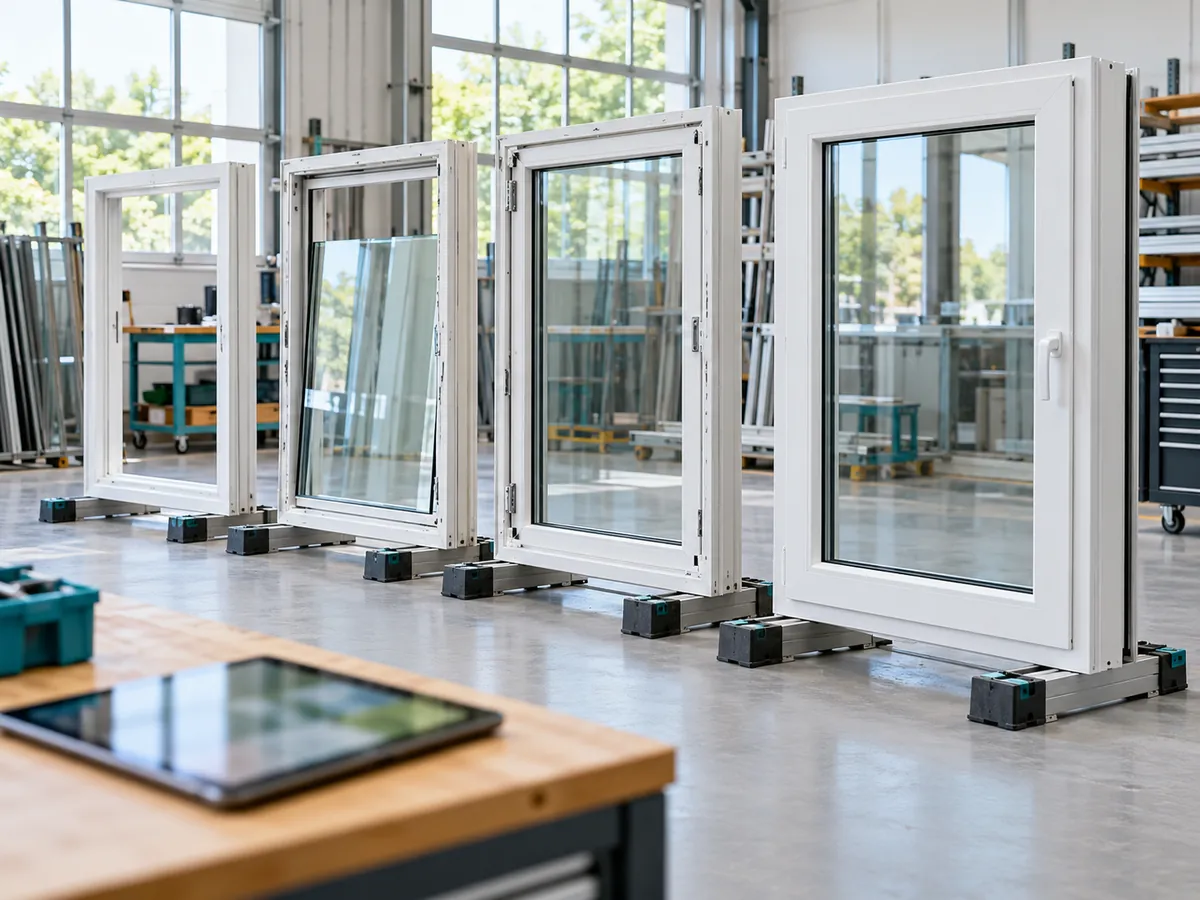
The workflow is a chain of interdependent tasks rather than a single job card. A typical residential or light commercial project progresses through site survey, measurement verification, quotation approval, fabrication release, purchasing, delivery planning, crew assignment, installation, punch list resolution and warranty documentation.
In a window project, the installer measures each opening, confirms that the frame is square and level, records obstructions and submits photographs. The office converts that package into a purchase order, verifies egress or tempered-glass requirements where the code applies, and tracks supplier confirmation. A punch list, meaning the documented set of deficiencies remaining at substantial completion, then governs the closeout phase.
In a glass project, the shop frequently requires final field measurements only after tile, framing or stonework is complete, because the finished substrate determines the true dimension. The fabrication release that follows triggers tempering, edging and any lamination, each with its own processing time. In a fencing project, the crew stakes lines and gate positions, confirms post depth against soil and frost conditions, reconciles material counts against the layout, and sequences work around weather and concrete curing time.
Every stage generates data: dimensions, photographs, approvals, supplier confirmations, delivery notes, labour hours and exceptions. When that information remains scattered across personal devices and inboxes, the business operates on memory and follow-up calls. That arrangement functions tolerably at three jobs a week, yet it becomes fragile at thirty jobs distributed across four crews, two storage locations and overlapping supplier lead times.
Why do manual coordination methods break down as job volume grows?
Manual coordination fails quietly at first. A coordinator texts one installer, updates one spreadsheet and mentally retains one supplier commitment, and nothing visibly goes wrong. Growth multiplies those small exceptions until follow-up consumes an entire working day.
A five-person operation can function on messaging apps, spreadsheets, email and telephone calls because the same individual observes nearly everything that happens. Introduce a second branch, night work for commercial storefronts, or subcontracted installation crews, and the structural gaps become apparent. Managers chase completion status, sales asks whether a measurement is final, the fabrication shop asks which drawing revision was approved, and the customer asks why the date moved.
Industry surveys cited in a 2026 construction sector review found that more than 60% of contractors identify poor coordination and communication as the leading cause of labour productivity loss (Rework Costs across the Construction Sector, 2026). The operational interpretation is straightforward: the constraint on growth is usually not demand or craftsmanship, but the administrative overhead of keeping everyone aligned as the number of simultaneous dependencies increases.
This is precisely where schedule growth originates. When fabrication lead time, meaning the interval between order release and finished goods, is not visible to the person booking the installation, dates are promised against assumptions. Each missed dependency then pushes the crew schedule, and the delay compounds across subsequent jobs that were planned around the original sequence.
Which workflows should trade contractors connect and automate first?
The most valuable candidates are the workflows where a data error becomes physically irreversible or financially consequential. Across window, glass and fencing operations, eight workflows recur consistently:
- Site measure and verification: standardised digital forms capturing dimensions, photographs, obstructions and substrate conditions, tied to the specific opening rather than the job in general.
- Measurement approval: a documented sign-off step before fabrication release, so the version on record is unambiguous.
- Fabrication release and lead-time tracking: the date released, the supplier’s confirmed completion date and automated alerts when that date approaches without confirmation.
- Purchasing and material ordering: hardware, flashing, fasteners, posts, panels and consumables linked to the job record rather than a separate spreadsheet.
- Delivery coordination: delivery windows matched against crew availability and site readiness, with exceptions flagged before the truck departs.
- Crew scheduling and assignment: which crew, which site, which date and which prerequisites must be complete beforehand.
- Installation completion and punch list: photographic evidence, deficiency items and resolution status recorded at the point of work.
- Warranty and follow-up: the installation record, product details and any subsequent service obligations retained against the customer account.
Automating the repetitive steps inside these workflows, such as reminder notifications, status requests and escalation of overdue approvals, removes the follow-up burden without removing the human decisions that actually require judgment.

How do connected data and AI improve operational visibility?
Connected data means that the measurement recorded on site, the fabrication order released by the office, the delivery confirmed by the supplier and the crew scheduled for installation all reference the same job record. A manager can then see, without telephoning anyone, which jobs await measurement approval, which orders are inside their lead time, which deliveries are confirmed and which crews are available.
AI contributes meaningfully only on top of that foundation. An AI-powered operations platform can use existing business data and configured rules to help teams identify what needs attention and when: flagging a fabrication order that has consumed most of its lead time without a confirmation, surfacing a crew assignment whose prerequisite tasks remain incomplete, or highlighting a cluster of installations scheduled against a delivery that has slipped. People define the rules and thresholds, the platform organises the data, automation handles the repetitive notifications, and AI assists with prioritisation where configured.
This framing matters because AI detached from workflows produces novelty rather than value. A chatbot cannot prevent a mismeasured rough opening, but a connected system that requires photographic verification before fabrication release can, and AI layered over that system can ensure the verification step is never quietly skipped when the schedule tightens. Accountability and consequential decisions remain with people; the system ensures those people are looking at accurate, current information.
What should you look for in task management software for window, glass and fencing contractors?
The evaluation criteria follow directly from the operational requirements described above, and they apply whether you are comparing dedicated trade software or a broader contractor operations platform:
- Granular task records: the ability to track individual openings, panels or fence sections within a job, because a single job may contain forty units with different dimensions and statuses.
- Mobile field capture: measurement forms, photographs and completion evidence submitted from the site rather than reconstructed afterward in the office.
- Date and dependency management: fabrication lead times, delivery windows and crew schedules visible in one timeline, with alerts when dependencies are at risk.
- Location awareness: geolocation confirmation of field activity where crews operate across multiple sites, which supports both accountability and payroll accuracy.
- Inventory visibility: stock levels of panels, posts, hardware and consumables across the shop, warehouse and vehicles.
- Recurring workflow support: standardised templates for repeat job types, so the fiftieth window replacement follows the same verified process as the first.
- Reporting: automated operational reporting that replaces manually compiled status summaries.
A candid caveat belongs here. A very small operation running stock-size products with one crew may legitimately need nothing more than a shared task list and a calendar; forcing a connected platform into that situation adds administration rather than removing it. The inflection point arrives with multiple crews, custom fabrication, supplier dependencies and a manager whose day has become an uninterrupted sequence of follow-up calls.
What this means for you
If you run a window, glass or fencing business, the diagnostic question is not whether your teams work hard, but whether your information moves reliably between the people who measure, the people who fabricate, the people who deliver and the people who install. A practical self-assessment:
- Measure-to-order risk: Can you retrieve, within one minute, the approved final measurement and photograph for any open job?
- Lead-time visibility: Do you know today which fabrication orders are approaching their confirmed dates without supplier confirmation?
- Crew readiness: When a crew is scheduled, is there a verifiable record that materials have arrived and prerequisites are complete?
- Follow-up burden: How many hours per week does your office spend requesting status updates that a system could surface automatically?
- Rework cost: Do you record rework causes, and do they trace back to data disconnects rather than workmanship?
If two or more of those answers are uncomfortable, the constraint on your growth is coordination infrastructure rather than demand, and that is a solvable problem.
How TrackerSuite fits window, glass and fencing operations
TrackerSuite is an AI-powered operations platform designed around exactly this class of problem: connecting tasks, field activity, materials and reporting so that growing businesses can scale workflows without a proportional increase in administrative effort. The relevant capabilities map directly onto the workflows described above.
Task Tracker addresses workforce coordination and field execution. Recurring workflow templates let a contractor codify the measure, approve, release, deliver and install sequence once and apply it to every subsequent job, while geolocation features support verification of field activity across distributed sites. Managers gain a consolidated view of assignment, completion and exception status instead of interrogating five people for updates.
Stack Tracker addresses the materials dimension. Location-wise stock assignment and a central inventory dashboard give the office real-time visibility of panels, posts, hardware and consumables across the shop, warehouse and vehicles, which is the information required to confirm that a scheduled crew will actually find materials on site. Dashboards and reports close the loop, replacing manually compiled summaries with current operational data.
The human-plus-AI model is deliberate: your team defines the workflows and approval rules, the platform organises the data, automation handles reminders and escalations, and AI-assisted features support prioritisation where configured. Foremen, estimators and managers remain responsible for the decisions that carry financial consequences.
How should a contractor implement connected task management without disrupting live jobs?
Implementation succeeds when it is sequenced rather than simultaneous. A pragmatic approach:
- Select one job type: choose your highest-volume or highest-rework category, such as residential window replacement or commercial storefront glass.
- Document the current workflow: record every step from site measure to warranty, including who performs it, what data it produces and where that data currently lives.
- Standardise the workflow digitally: build the templated sequence with required photographs, approval gates and lead-time fields, so the measurement-to-release handoff cannot be bypassed.
- Pilot with one crew: run live jobs through the system alongside existing habits for a defined period, and refine the templates against reality.
- Connect materials and scheduling: extend the record to include inventory status and crew assignment, so delivery and installation planning draw on the same data.
- Scale deliberately: roll the proven workflow to additional crews and branches, then layer reporting and AI-assisted prioritisation onto the connected data.
Contractors who attempt to digitise every workflow simultaneously usually stall; those who prove one workflow and replicate it tend to sustain the change.
FAQs
What is task management software for window contractors?
It is software that organises the individual tasks within window installation work, such as site measurement, measurement approval, fabrication ordering, delivery and crew installation, as connected records rather than isolated notes. For window contractors specifically, the critical capability is tracking each opening’s dimensions and status within a job, because a single project may contain dozens of custom units.
How is task management different from project management for trade contractors?
Project management tools typically organise budgets, schedules and documents at the job level, whereas task management governs the granular execution steps inside each job. Glass, window and fencing contractors usually need the execution layer most urgently, because rework originates in the handoffs between measuring, fabricating and installing rather than in high-level planning.
When is a simple task list enough for a fencing or glass crew?
A shared task list is adequate when one crew handles a modest volume of jobs using standard-size materials with few supplier dependencies. It becomes insufficient when multiple crews, custom fabrication lead times, several storage locations and a growing follow-up burden mean the manager can no longer personally observe every dependency.
Can task management software track materials and fabrication lead times?
A connected operations platform can, provided material records and supplier confirmations are linked to the job rather than kept in separate spreadsheets. This linkage is what allows the system to warn that a scheduled installation lacks a confirmed delivery, which is among the most common and most preventable causes of wasted crew mobilisations.
Does AI replace the project manager in a contracting business?
No. In a well-configured system, people define the workflows and approval rules, automation handles repetitive reminders and escalations, and AI assists by prioritising attention based on available data. Decisions with financial or safety consequences, such as releasing fabrication or committing a completion date to a customer, remain with accountable people.
Conclusion: build the connection before you add the intelligence
The evidence consistently points in one direction: construction rework is predominantly an information problem, and window, glass and fencing contractors feel it acutely because their materials are custom, their tolerances are unforgiving and their schedules depend on sequential handoffs. The corrective sequence is to connect the workflow first, automate the repetitive follow-up second, and apply AI-assisted prioritisation only once trustworthy data exists.
Businesses that make that transition replace a manager’s day of telephone follow-up with a consolidated view of measurement status, fabrication progress, delivery confirmation and crew readiness. That is what allows a contracting business to add crews and branches without adding administrative chaos in equal proportion.
If you want to see how a connected task, inventory and reporting system would work for your operation, review the TrackerSuite plans and free starter option and test the workflow on one job type before scaling it across your crews.
Leave a Reply