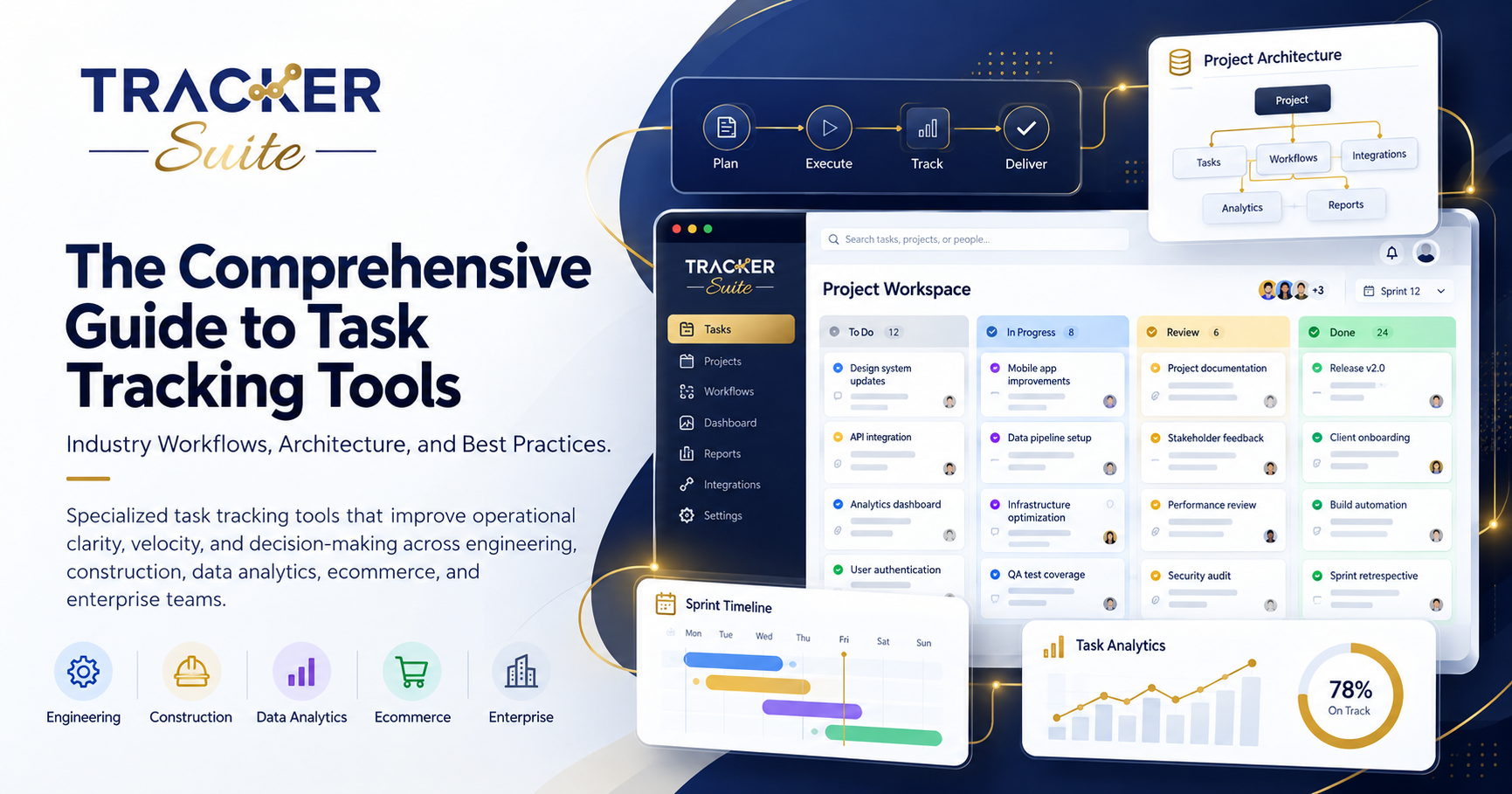
In a modern, distributed economy, staying organized requires far more than static spreadsheets, endless email threads, and fragmented chat notifications. Teams today manage complex dependencies, shifting project scopes, and aggressive delivery timelines. When organizations lack a single source of truth for their daily deliverables, critical work falls through the cracks, teams suffer from context switching, and leaders lose strategic visibility.
Adopting specialized task tracking software provides the structural framework needed to convert ambitious corporate goals into measurable, repeatable execution. Whether you lead a software engineering department, coordinate physical construction operations, direct an ecommerce brand, or manage multi-tier executive calendars, selecting the right task tracking system fundamentally elevates operational efficiency.
Core Task Tracking Tools Benefits Across Organizations
Why do high-performing companies retire manual spreadsheets in favor of dedicated task management systems? The concrete benefits of task tracking tools directly impact both bottom-line profitability and employee retention:
- Unambiguous Ownership and Accountability: When every task has an explicit owner, a deadline, and clear milestone criteria, operational ambiguity disappears. Team members understand their priorities without second-guessing responsibilities.
- Real-Time Operational Visibility: Department heads and team leads can assess workflow health instantly, eliminating the need for constant status update meetings.
- Reduced Cognitive Overhead and Context Switching: Consolidating documentation, communication threads, priority tags, and checklists in one workspace prevents productivity loss caused by jumping between disconnected applications.
- Data-Driven Capacity and Workload Balancing: Workload distribution views allow managers to identify bottlenecks and balance assignments before individual contributors experience burnout.
- Standardized Quality Control and Repeatability: Documented task templates turn complex, ad-hoc workflows into dependable standard operating procedures (SOPs).
Task Tracking Tools for Decision Making and Executive Oversight
Strategic leadership requires rapid access to clean, real-time operational data. Executive decision-making falters when managers are forced to rely on lagging indicators or wait days for manual reporting rollups. Modern task tracking tools for decision making aggregate real-time task statuses, team completion velocities, and resource allocation into intuitive visual dashboards.
With consolidated operational metrics, executive teams can confidently:
- Reallocate engineering or operational personnel to high-impact strategic initiatives.
- Adjust release timelines based on empirical velocity rather than speculative estimates.
- Detect operational friction and budgetary overruns before quarterly reviews.
- Evaluate vendor and department performance against strict service level agreements (SLAs).
By turning daily task activities into actionable operational intelligence, organizational leadership shifts from reactive firefighting to proactive, strategic execution.
Technical Workflows: Engineering, Civil Design, and Data Analytics
Technical disciplines require robust dependency tracking, structured milestone handoffs, and detailed technical documentation.
Task Tracking Tools for Engineers and Software Teams
Engineering workflows demand continuous iteration, modular architectures, and structured development sprints. Purpose-built task tracking tools for engineers support agile frameworks—including Scrum and Kanban—while integrating directly into version control systems, automated continuous integration pipelines, and bug trackers.
Crucial capabilities for engineering teams include:
- Dependency Mapping: Ensuring engineers cannot begin downstream tasks until prerequisite architectural blueprints or pull requests are merged.
- Sprint Planning and Burndown Analytics: Tracking velocity across two-week or monthly engineering cycles to forecast release dates accurately.
- Automated Workflow State Triggers: Automatically transitioning cards from “In Development” to “Code Review” and “QA Testing” based on git branch updates.
Task Tracking Tools for Data Analysts
Data analysts constantly balance competing demands: maintaining automated reporting pipelines while fielding ad-hoc query requests from sales, marketing, finance, and product teams. Modern task tracking tools for data analysts establish structured request intake queues, prioritize deep statistical research, and track the development of business intelligence dashboards.
By scoring incoming analytical tickets by business impact and query complexity, data teams protect deep-work focus time while providing organizational stakeholders complete visibility into pipeline timelines and data modeling roadmaps.
Task Tracking Tools for Civil Engineers
Civil engineering projects involve extensive multi-phase planning, regulatory approvals, structural calculations, and environmental impact assessments. Task tracking tools for civil engineers bridge the gap between design office calculations and municipal compliance checklists. Tracking milestone handoffs between structural, geotechnical, MEP (mechanical, electrical, and plumbing), and municipal engineering consultants ensures multi-layered architectural blueprints progress cleanly through rigorous review gates.
Task Tracking in Construction and Field Operations
Few industries operate with higher risk profiles or tighter margins than construction. Scheduling delays lead to financial penalties, while physical site safety demands absolute adherence to compliance standards. Task tracking tools for construction provide general contractors, project managers, and trade subcontractors with a centralized workspace to manage punch lists, safety inspections, vendor deliveries, and submittals.
When mobile-enabled task tools are deployed on active job sites, field supervisors can:
- Document safety audits and equipment inspections directly from tablets and mobile devices.
- Attach timestamped photographic proof of milestone completions before handing over work to subsequent trades.
- Update sub-trade schedules dynamically, preventing costly on-site contractor idle time.
Operations, Administration, and Event Logistics
Operational consistency powers high-performing companies, non-profit institutions, and large-scale public events.
Task Tracking Tools for Executive Assistants
Executive assistants (EAs) manage complex travel itineraries, board meeting preparation, VIP communications, and confidential operational projects. Tailored task tracking tools for executive assistants enable EAs to compartmentalize sensitive initiatives, structure recurring administrative cadences, and configure multi-tier reminder alerts.
With granular bucket views and strict permission controls, EAs can coordinate complex itineraries and follow up on critical board deliverables without risking confidential information leaks.
Task Tracking Tools for Event Planning
Organizing a major corporate summit, trade exhibition, or hybrid conference requires tracking thousands of interdependent logistics items. Robust task tracking tools for event planning allow coordinators to divide projects into distinct operational phases: venue contracting, speaker onboarding, catering logistics, AV testing, sponsor deliverables, and attendee badge registration.
Interactive Gantt charts and dependency chains ensure that a delay in venue permitting or vendor staging immediately flags downstream risks across marketing and ticket distribution.
Task Tracking Tools for Education and Academic Administration
Educational institutions, instructional designers, and university departments manage curriculum rollouts, accreditation compliance, faculty scheduling, and student intake cycles. Implementing task tracking tools for education creates structured accountability for grading deadlines, syllabus reviews, and administrative committee actions, ensuring educational staff maintain focus on teaching quality.
Scaling Commercial Operations: Ecommerce, Entrepreneurs, and Enterprises
From solo founders to global enterprises, task visibility is essential for sustained business health and team coordination and workflow transparency.
Task Tracking Tools for Ecommerce
Modern ecommerce brands operate in an aggressive multichannel retail environment. Between managing supply chain timelines, planning product photoshoots, coordinating paid advertising campaigns, and resolving customer support tickets, online retailers juggle hundreds of moving parts. Tailored task tracking tools for ecommerce centralize:
- New product launch workflows across copywriting, visual asset design, SKU configuration, and inventory staging.
- Seasonal promotional campaign schedules spanning email marketing, influencer partnerships, and on-site banners.
- Vendor purchase order tracking and warehouse replenishment milestones.
Task Tracking Tools for Entrepreneurs
Startup founders must switch constantly between strategic fundraising, product development, customer discovery, and hiring. Task tracking tools for entrepreneurs act as a virtual Chief of Staff, allowing small founding teams to prioritize high-leverage activities, delegate emerging tasks cleanly to early hires, and avoid getting bogged down in low-value administrative friction.
Task Tracking Tool for Enterprises
Large enterprises operate with multi-layered management structures, strict compliance requirements, and hundreds of cross-functional teams. A scalable task tracking tool for enterprises must deliver enterprise-grade permission controls, audit logs, single sign-on (SSO), and cross-departmental reporting dashboards.
When rolled out across thousands of employees, enterprise task platforms break down departmental silos, standardize operational practices, and ensure strategic company OKRs (Objectives and Key Results) cascade cleanly into daily frontline tasks.
Creative and Independent Workflows
Creative production and client services present unique task tracking challenges, balancing creative iteration with rigid commercial deadlines.
Task Tracking Tools for Creatives and Agencies
Design agencies, video production houses, and creative studios require platforms that make visual feedback frictionless. Purpose-built task tracking tools for creatives offer visual Kanban boards, digital asset attachments, and structured client review stages.
By categorizing tasks into clear production stages—such as Concept, Wireframe, Draft, Internal Review, Client Approval, and Final Delivery—creative directors maintain pipeline momentum while protecting artists from ambiguous scope creep.
Task Tracking Tools for Content Creators
Digital content creators, YouTubers, and podcasters manage multi-platform publishing calendars under tight production turnarounds. Task tracking tools for content creators streamline the content lifecycle across ideation, scripting, recording, audio/video editing, thumbnail design, and multi-channel publishing.
Using repeatable task templates for each episode or article ensures creators never forget crucial promotion steps like SEO optimization, community posting, or newsletter distribution.
Task Tracking Tools for Freelancers
Independent consultants and freelancers must balance client delivery with self-marketing, invoicing, and client onboarding. Simple, lightweight task tracking tools for freelancers help solo professionals organize multiple client workspaces, set milestone billing reminders, and track billable project phases without getting overwhelmed by enterprise complexity.
Workflow Comparison Matrix Across Industries
To illustrate how task tracking adapts across domains, consider the key features and workflow types prioritized by different professions:
Industry / RolePrimary Workflow NeedsCore Feature RequirementsSoftware & Systems EngineersSprints, backlog grooming, bug trackingGit integrations, automated CI/CD triggers, burndown chartsCivil Engineers & ConstructionOn-site inspections, punch lists, compliance checksMobile app access, photo attachments, blueprint versioningEcommerce & RetailProduct launches, promotional campaigns, inventory updatesReusable launch templates, cross-channel calendar viewsData AnalystsAd-hoc query intake, data pipeline maintenanceCustom request forms, priority tagging, backlog queuesExecutive AssistantsConfidential projects, executive calendar prep, board docsGranular permissions, multi-tier reminder alerts, private bucketsCreatives & Content CreatorsAsset review, publishing pipelines, client feedbackVisual Kanban boards, file previews, staging columnsEnterprisesCross-functional alignment, portfolio managementAdvanced security/SSO, enterprise reporting, custom audit logs
How to Select the Right Task Tracking Platform
Selecting a task tracking system requires aligning team dynamics with software capabilities. Consider the following criteria when evaluating options:
- User Adoption and Interface Simplicity: The most sophisticated tool will fail if the interface is overly complex. Choose platforms that allow contributors to begin tracking work with minimal onboarding friction.
- Customizability vs. Structure: Highly technical workflows require strict dependencies and custom fields, whereas creative teams benefit from visual, drag-and-drop flexibility.
- Scalability and Pricing Structure: Ensure the platform offers flexible pricing tiers that grow alongside your business—from free starter plans for small teams to comprehensive enterprise configurations.
- Unified Business Tooling: Standalone task trackers often create information silos. Modern suites combine task management with sales tracking, inventory oversight, and automated alerts to provide an end-to-end operational hub.
Streamline Your Team Workflows with TrackerSuite
Whether you are scaling an agile development squad, managing site builds, running an ecommerce empire, or organizing executive leadership operations, operational success starts with clarity and accountability.
Explore TrackerSuite’s flexible pricing plans to find the right task, inventory, and sales management solution tailored for your team’s operational growth.
Leave a Reply