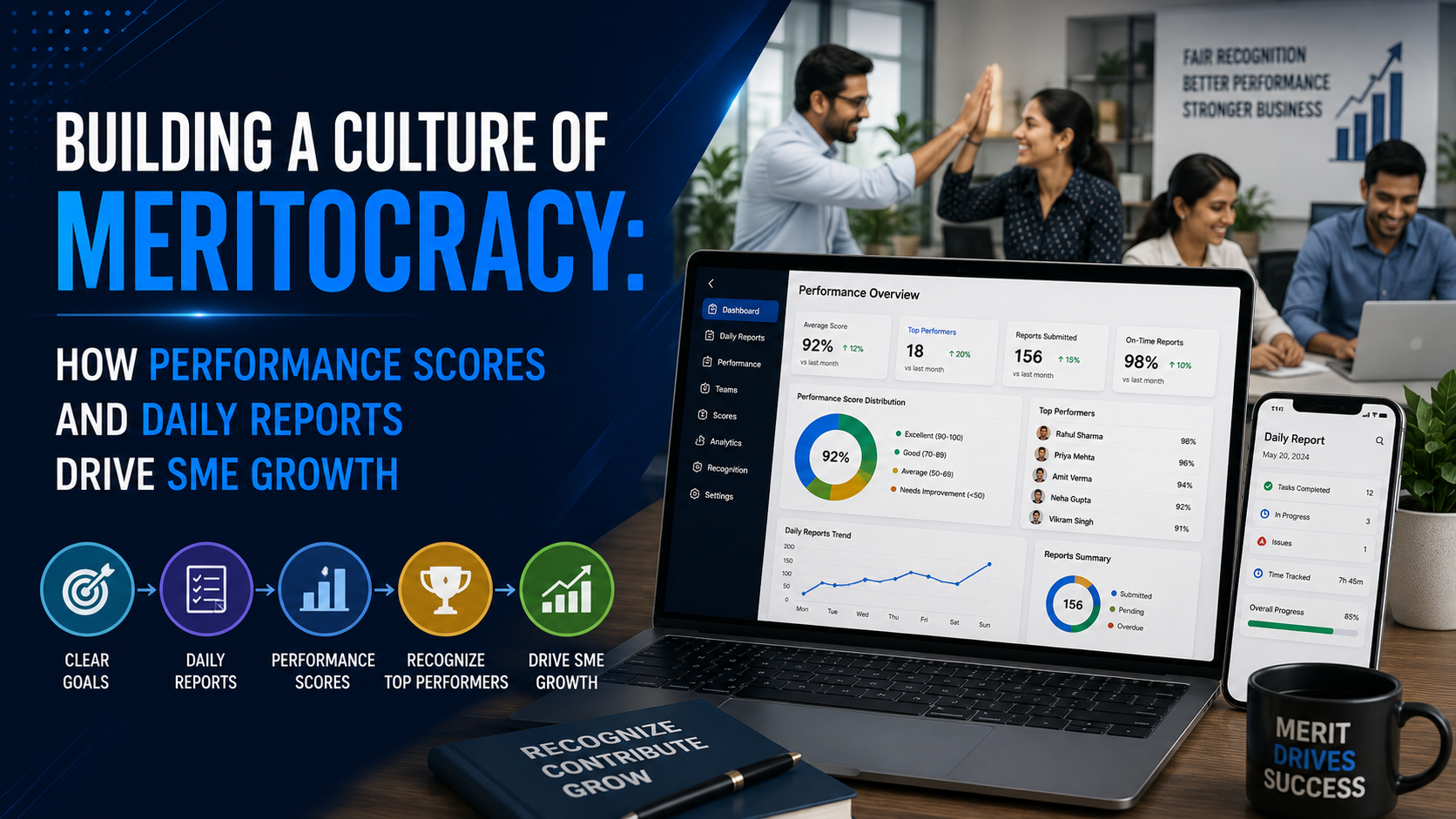
In growing small and medium-sized enterprises (SMEs), operational visibility separates sustainable scaling from chaotic stagnation. When teams expand beyond a handful of people, informal hallway check-ins and subjective impressions fail. Without structured systems, proximity bias and vocal self-promotion overshadow quiet, consistent execution, leading to disengaged top performers and hidden operational bottlenecks.
To overcome these hurdles, modern enterprises are replacing fragmented spreadsheets and endless chat threads with dedicated digital architectures. Implementing robust Task Management Software alongside transparent performance scoring, visual workflow dashboards, and automated daily reporting creates an objective workplace culture where merit flourishes and operational clarity becomes second nature.
The SME Visibility Dilemma: Subjectivity vs. Objective Execution
In many emerging businesses, leaders evaluate team contributions through a distorted lens. An employee who frequently speaks up in meetings or stays visibly late at the office is often perceived as a top contributor, regardless of their actual deliverable output. Conversely, an employee who quietly completes high-impact deliverables on schedule may be overlooked during bonus and promotion cycles.
This subjectivity creates three compounding liabilities for growing companies:
- Erosion of Top Talent Morale: When recognition is tied to visibility rather than measurable output, key contributors feel undervalued, driving voluntary turnover among your most capable staff.
- Compounding Project Delays: Without centralized tracking, bottlenecks in a complex project workflow remain invisible until a critical deadline or client milestone is compromised.
- Managerial Overhead and Fatigue: Founders and department heads spend excessive hours chasing status updates via phone calls, ad-hoc messages, and status meetings instead of driving strategic growth.
Overcoming this challenge requires establishing a single source of operational truth. A comprehensive task management system replaces subjective guesswork with verifiable, real-time delivery data.
Traditional SME Operations                Merit-Based Digital Operations
[Ad-Hoc Check-ins & Biases]      --->      [Centralized Task Management System]
        │                                                 │
        ▼                                                 ▼
• Subjective Evaluations                          • Dynamic Performance Scores
• Invisible Bottlenecks                           • Real-Time Workflow Dashboards
• High Management Overhead                        • Automated Daily Activity Digests
Pillar 1: Transparent Employee Performance Scores
At the foundation of an authentic meritocracy lies objective, transparent scoring. Performance evaluations should never arrive as an end-of-year surprise; they must serve as a continuous, transparent feedback loop visible to both the employee and leadership.
Using specialized Employee Task Management Software, organizations can calculate dynamic performance scores based on verifiable operational criteria:
- Task Completion Rate: The percentage of assigned items completed within specified target windows.
- Proof of Work Verification: Attaching tangible artifacts—such as completed design files, signed contracts, code repositories, or customer sign-offs—directly to tasks before closing them.
- Turnaround Velocity: Measuring the cycle time between initial assignment, active execution, and final review.
- Consistency and Reliability: Tracking adherence to recurring daily, weekly, and monthly operational routines.
+--------------------------------------------------------------------------+
|                       BALANCED PERFORMANCE SCORING                       |
|                                                                          |
|   [Task Completion]   +   [Proof of Work]   +   [On-Time Velocity]       |
|         (40%)                   (30%)                   (30%)            |
|                                   │                                      |
|                                   ▼                                      |
|              OBJECTIVE MERIT SCORE (Real-Time Dynamic Index)             |
+--------------------------------------------------------------------------+
When team members log into their workspace and understand exactly how their contributions are evaluated, ambiguity disappears. Performance conversations shift from subjective negotiations to collaborative reviews of real data. This clarity empowers individuals to take genuine ownership of their daily output.
Pillar 2: Visual Dashboards and Workflow Transparency
Raw tabular data and dense spreadsheets create cognitive overload for busy managers. High-growth SMEs require immediate visual comprehension of operational velocity and team capacity. Visual dashboards transform complex activity records into clear, actionable business intelligence.
Within modern Workflow Management Software, visual representations provide instant clarity across several vital operational areas:
1. Workload Distribution and Capacity Planning
Visual workload charts show whether specific team members are overloaded while others have available bandwidth. This enables proactive task rebalancing before burnout or delivery failures occur.
2. Milestone Timelines and Bottleneck Detection
Visual progress bars and stage-gate pipelines indicate exactly where a deliverable is stalled—whether in review, waiting on third-party inputs, or stuck in execution.
3. Cross-Departmental Dependencies
When marketing, sales, and operations collaborate on a shared launch, visual dependency mapping ensures each team member knows what prerequisite tasks must be cleared before their phase begins.
By leveraging comprehensive Work Management Software, SMEs eliminate information silos, ensuring that every contributor sees how their daily tasks drive broader organizational goals.
Pillar 3: Real-Time Accountability via Automated Daily Reports
One of the most persistent drains on SME productivity is the manual status chase. When managers must repeatedly ask for updates, it creates friction, interrupts deep focus, and fosters an environment of perceived micromanagement.
Modern project task management software solves this by automating operational updates across accessible communication channels, including email and direct messaging applications like WhatsApp.
+-------------------------------------------------------------------------+
|                   DAILY AUTOMATED REPORTING CYCLE                       |
|                                                                         |
|   [Real-Time Task Updates] ──> [Automated End-of-Day Aggregation]       |
|                                                │                        |
|                                                ▼                        |
|                                    [WhatsApp / Email Digest]            |
|                                                │                        |
|                                                ▼                        |
|                          [Instant Leadership Visibility Without Calls]  |
+-------------------------------------------------------------------------+
Why Daily Automated Digests Drive Consistent Execution
- Frictionless Executive Oversight: Leadership receives a consolidated end-of-day digest detailing completed tasks, open bottlenecks, and pending approvals without scheduling a single status call.
- Built-In Accountability: When team members know an automated daily summary compiles daily output, regular status updates become part of the natural workflow rather than an afterthought.
- Early Intervention on Stalled Items: Stagnant tasks are highlighted automatically, allowing managers to remove roadblocks before client deadlines are impacted.
Deploying a structured task tracking system frees managers to focus on coaching, resource allocation, and strategic growth rather than administrative follow-ups.
Connecting Project Milestones with Daily Task Execution
A common challenge in growing businesses is the disconnect between high-level project goals and daily task execution. Executive teams often create comprehensive project plans in one tool, while individual contributors manage their daily to-do items across disjointed notes, spreadsheets, or chat messages.
Bridging this gap requires an integrated pm project management software approach that connects high-level milestones directly to individual task assignments.
Operational RequirementDisconnected Ad-Hoc MethodsIntegrated Task & Project SoftwareGoal AlignmentHigh-level goals hidden in static slide decksEvery task links directly to project milestonesAccountabilityUnclear ownership, shared verbal promisesSingle accountable owner with verifiable proof of workProgress TrackingLengthy weekly review meetingsReal-time progress dashboards and automated alertsResource UtilizationUnbalanced workloads, frequent burnoutVisual capacity indicators across the entire teamAuditabilityLost message threads and scattered filesCentralized activity history and attached deliverables
Selecting a unified task management tool ensures that strategic initiatives are broken down into actionable, assignable steps with transparent timelines.
Using an all-in-one productivity and visibility platform allows leaders to oversee multi-stage workflows, monitor shift activities, and maintain operational momentum across distributed and in-office teams alike.
Step-by-Step Implementation Framework for SMEs
Transitioning from informal management to a transparent, data-driven meritocracy requires thoughtful change management. Follow this structured roadmap to implement an objective system successfully:
Phase 1: Define Criteria  ──> Phase 2: Deploy Platform ──> Phase 3: Automate Digests ──> Phase 4: Align Rewards
(Standardize outputs)         (Adopt core tool)            (Enable daily reports)        (Recognize top scorers)
Step 1: Standardize Output Definitions and Task Verification
Before assigning scores, establish clear definitions of what constitutes a completed task. Require specific proof-of-work attachments—such as completed drafts, system logs, or customer sign-offs—to ensure quality standards remain consistent across all departments.
Step 2: Implement a Purpose-Built Team Task Management Software
Consolidate all departmental workflows into a centralized team task management software platform. Avoid using multiple fragmented tools for different teams, which recreates data silos and complicates cross-departmental collaboration.
Step 3: Establish Automated Daily and Weekly Digest Channels
Configure automated notifications for upcoming due dates (48 hours and 24 hours prior) and set up automated end-of-day summary reports via email or WhatsApp. This guarantees continuous operational visibility across all management levels without unnecessary meetings.
Step 4: Align Incentives and Appraisals with Objective Data
Tie bonuses, recognitions, and promotion pathways directly to verified performance scores. When team members witness high-scoring, reliable contributors receiving tangible rewards, engagement surges and the meritocratic culture solidifies.
Key Pitfalls to Avoid When Rolling Out Performance Tracking
While transparent scoring and automated reporting dramatically boost efficiency, businesses must implement these systems carefully to maintain team trust:
- Focusing on Activity Over Outcomes: Avoid tracking arbitrary metrics like mouse movement or continuous screen time. Focus strictly on deliverable completion, quality proof of work, and deadline reliability.
- Inconsistent Review Processes: If managers fail to review attached deliverables or ignore automated alerts, employees may view the system as administrative overhead rather than a true performance driver.
- Lack of Initial Onboarding: Ensure all team members receive thorough training on how to update task statuses, attach proof of work, and read their personal performance scores.
Summary: Scaling with Clarity and Confidence
Building a culture of meritocracy is one of the highest-leverage investments an SME leader can make. By replacing subjective impressions with transparent scoring metrics, visual workflow dashboards, and automated daily digests, organizations foster an environment where top performers thrive, bottlenecks are resolved early, and operational scaling becomes predictable.
Ready to transform your team’s productivity and establish clear operational accountability? Explore the TrackerSuite pricing plans and start your free trial today to unlock automated daily reporting, intelligent task management, and real-time performance visibility.
Leave a Reply