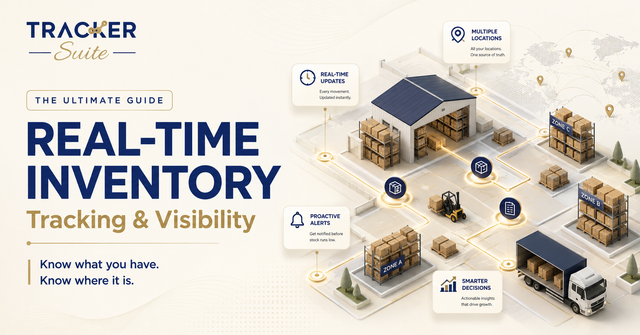
Discover how real-time inventory tracking can transform your supply chain, eliminate stockouts, and boost sales. Learn strategies for location-based stock management, leveraging AI insights, and optimizing your fulfillment processes.
The Evolving Landscape of Modern Supply Chains and Retail
The business environment today is more fast-paced, interconnected, and demanding than ever before. Customer expectations for rapid, accurate delivery are at an all-time high, and the marketplace tolerance for out-of-stock items, delayed shipments, or mismanaged orders is practically zero. Whether you are running a sprawling e-commerce empire, a localized retail chain, or a complex B2B distribution network, the ability to know exactly what you have, where it is located, and how fast it is moving is the ultimate competitive advantage.
For decades, businesses relied on periodic cycle counts, fragmented spreadsheets, and end-of-month reconciliations to figure out their stock levels. By the time the data was compiled, it was already obsolete. Today, relying on outdated methods is a surefire way to lose market share. The shift toward omnichannel retail and distributed warehousing has necessitated a fundamental change in how businesses operate.
This is where modern software solutions step in, replacing manual, error-prone workflows with dynamic, automated systems. Implementing an intelligent, real-time approach allows companies to stop guessing and start operating with absolute certainty. In this comprehensive guide, we will explore the mechanisms, benefits, and strategic advantages of upgrading your operational infrastructure, ensuring that your business is always prepared to meet consumer demand head-on.
What Exactly is Real-Time Inventory Tracking?
At its core, real-time inventory tracking is the continuous, automated process of recording the movement of goods in and out of your business the exact moment those movements occur. Unlike periodic inventory systems where stock levels are updated at the end of the day, week, or month, a real-time system updates your centralized database instantly every time an item is received, transferred, picked, packed, or sold.
This instantaneous syncing is made possible through a combination of cloud-based software architectures, API integrations across your sales channels, and hardware like barcode scanners or RFID tags on the warehouse floor. When a customer clicks “Buy Now” on your website, the system immediately deducts that item from the available stock pool. If a warehouse worker scans a pallet of new arrivals on the receiving dock, those items instantly become visible and available for your sales team to sell.
Real-time tracking fundamentally changes the operational rhythm of a business. It transitions a company from a reactive stance—where managers are constantly putting out fires and rushing emergency purchase orders—to a proactive stance, where data-driven insights dictate smooth, predictable supply chain movements.
The Hidden Costs of Poor Visibility
To truly appreciate the value of real-time systems, it is essential to understand the financial and operational toll that poor visibility takes on an organization. Operating without accurate, up-to-the-minute data creates a ripple effect of inefficiencies that erode profit margins.
The Nightmare of Stockouts and Overselling
Without live data syncing across all channels, you run a high risk of overselling. If an item sells out in your physical store, but your online storefront isn’t updated for another six hours, online shoppers will continue to purchase a product you no longer have. This leads to cancelled orders, frustrated customers, negative reviews, and a tarnished brand reputation.
The Burden of Overstocking and Dead Stock
Conversely, when managers cannot trust their stock numbers, they tend to overcompensate by ordering “safety stock.” While a small buffer is wise, excessive overstocking ties up valuable working capital in goods that just sit on warehouse shelves. Over time, these items may become obsolete, expire, or fall out of fashion, transforming into dead stock that must be heavily discounted or written off entirely.
The Drain of Manual Reconciliations
Manual inventory counts and data entry are incredibly labor-intensive. When stock numbers don’t match the sales records, teams are forced into last-minute scrambles to figure out where the discrepancy occurred. Was it theft, a mis-pick, or a data entry typo? Stopping operations to perform emergency audits wastes time and resources that should be spent on growth and customer service. Stop manual reconciliations; always-accurate data equals confident ordering and fewer write-offs.
Core Advantages of Real-Time Inventory Management
Transitioning to a modernized infrastructure provides a wealth of benefits that touch every department in your organization, from the warehouse floor to the executive boardroom. Effective inventory management is no longer just a backend administrative duty; it is a critical driver of profitability.
Always-Accurate Data and Centralized Dashboards
The primary advantage of a real-time system is the creation of a single source of truth. With a central inventory dashboard, your team can view one screen that reflects every location, warehouse, and retail store. This eliminates the need for tab-hopping or cross-referencing multiple outdated spreadsheets. Fast, accurate decisions can be made instantly because the data is inherently trustworthy.
Proactive Alerts and Notifications
Modern systems take the guesswork out of procurement. Instead of waiting for a stockout to realize you need to reorder, automated alerts and notifications monitor your inventory levels around the clock. By setting customizable par levels, you receive low-stock nudges before a shortage becomes a problem, ensuring smooth replenishment and eliminating emergency freight costs.
Creating an Inventory-to-Sales Funnel
One of the most innovative ways to view your stock is through an inventory-to-sales funnel. Just as marketing and sales teams track leads moving through a pipeline toward a conversion, operations teams can track how SKUs convert into revenue. By tracking the order lifecycle and stock movement through structured, activity-based updates, your inventory flow becomes fully automated, auditable, and actionable.
Mastering Location-Based Tactics

As businesses scale, they rarely operate out of a single facility. You might have a primary distribution center, several regional fulfillment hubs, third-party logistics (3PL) partners, and brick-and-mortar retail locations. Managing stock across a distributed network requires granular control and location-wise stock assignment.
The Importance of Regional Tracking
By analyzing your inventory by state, you can begin to see macro-level trends in your sales data. Perhaps your winter apparel sells significantly faster in the Northeast, while your outdoor patio furniture is moving rapidly in the Sunbelt. Tracking stock levels at the state level allows you to strategically position your goods closer to where the demand is highest. This not only reduces transit times and shipping costs but also dramatically improves the customer experience by enabling two-day or even next-day delivery.
Hyper-Local Optimization
Drilling down even further, tracking your inventory by city allows for hyper-local optimization. You can assign inventory to specific city-level warehouses or retail stores based on localized promotional campaigns or seasonal events. Think of location-wise stock assignment like assigning your hottest leads to your best sales reps—you want the right product in the exact right place to maximize conversions.
Location performance tracking provides team and location reports that measure who is selling what, and where. By seeing which cities sell faster and which need promotional pushes, you can use real data to push stock precisely to the locations where it will convert into revenue most efficiently.
Building the Perfect Product Inventory Ecosystem
When evaluating software solutions to handle your operations, it is crucial to look for platforms that offer a comprehensive suite of features. Managing your product inventory requires more than basic counting; it requires a structured ecosystem designed for visibility and control.
Controlled Access and Visibility
Not everyone in your organization needs to see everything. In fact, providing too much access can lead to unauthorized changes and costly errors. A robust system will offer controlled access and visibility, allowing you to limit who sees what by location or department. For example, a regional manager may only need visibility into the warehouses they oversee, rather than the global supply chain. This reduces clutter, increases accountability, and minimizes the risk of internal data tampering.
Activity-Based Flow and Lifecycle Tracking
Stock doesn’t just sit; it moves through various stages. A perfect ecosystem provides activity-based updates, meaning stock moves through stages in a structured flow. From “Received” to “In Quality Control,” to “Pick/Pack,” to “Shipped,” tracking the full order lifecycle ensures that nothing gets lost in the shuffle. This auditable trail is invaluable for resolving customer disputes and optimizing warehouse efficiency.
Actionable Dashboards vs. Static Reports
There is a profound difference between a static report and an actionable dashboard. Built-in, actionable dashboards don’t just show you past data; they synthesize that data to tell you what to reorder, where to push excess stock, and how to hit your revenue targets. This turns raw numbers into strategic operational directives.
Who Benefits from Real-Time Stock Visibility?
The implementation of a real-time tracking system causes a positive ripple effect across the entire organizational chart.
Warehouse Managers: They benefit from organized workflows, reduced mis-picks, and a clear understanding of daily tasks. The chaos of end-of-month counts is replaced by continuous cycle counting supported by real-time data.
Sales and Marketing Teams: Sales reps can sell with confidence, knowing that the stock they are promising to clients actually exists. Marketing teams can align their campaigns with inventory levels, ensuring they don’t spend advertising budget promoting products that are out of stock.
Customer Service Representatives: When a customer calls asking about an order, CSRs can provide immediate, accurate answers about stock availability and order status, drastically improving customer satisfaction scores.
C-Suite and Executives: Leadership gains a macro-level view of the company’s financial health. They can track the inventory-to-sales funnel, optimize working capital, and make informed decisions about expanding into new markets based on regional location performance.
The Role of Artificial Intelligence in Stock Visibility
The most advanced systems today are leveraging the power of Artificial Intelligence (AI) to transform inventory management from a tracking tool into a predictive powerhouse. AI-powered visibility systems, like Tavi AI, analyze vast amounts of historical data, seasonal trends, and market variables to forecast demand with incredible accuracy.
AI algorithms can detect subtle shifts in purchasing behavior that human analysts might miss. For instance, if an AI detects a sudden spike in demand for a specific SKU in a particular region, it can automatically trigger alerts to reroute stock from a slower-moving warehouse to the high-demand location. This intelligent automation ensures that you are never caught off guard and are always positioned to capitalize on market opportunities.
Furthermore, AI enhances sales vs. inventory analytics, providing a deeper understanding of how long stock sits before converting. By continuously learning from your specific business cycles, AI makes your supply chain more resilient, agile, and profitable.
Best Practices for Implementing a Real-Time System
Upgrading to a real-time inventory system is a significant operational shift. To ensure a smooth transition and maximize your return on investment, follow these best practices:
1. Conduct a Comprehensive Audit: Before implementing new software, clean up your existing data. Do a complete physical count of your warehouse, eliminate dead stock, and establish clear standard operating procedures for your floor staff.
2. Standardize Naming Conventions and SKUs: Ensure that every product, variant, and bundle has a unique, logical SKU. Inconsistent naming conventions will cause data sync errors and create confusion across your sales channels.
3. Choose a Scalable Platform: Select a solution that offers central inventory dashboards, location performance tracking, and automated alerts. Ensure the platform can handle multiple warehouses and complex routing as your business grows.
4. Map Out Location Access: Take the time to set up role-based permissions. Configure your system’s controlled access and visibility so that team members only see the locations and data relevant to their specific roles.
5. Train Your Team Thoroughly: The best software in the world is useless if your staff doesn’t know how to use it. Invest time in training your warehouse workers on how to scan items properly, and train your management team on how to interpret the actionable dashboards.
Conclusion
In a highly competitive commercial landscape, visibility is everything. Relying on outdated manual processes leaves you vulnerable to stockouts, bloated holding costs, and lost revenue. By embracing real-time tracking, you empower your business with always-accurate data, actionable insights, and an automated flow that treats inventory as a vital part of your revenue funnel.
From granular location-wise assignments to AI-powered predictive analytics, the tools available today are designed to simplify, organize, and automate your operations. Stop letting inventory inefficiencies drain your profits. Invest in real-time visibility, gain control over your supply chain, and watch as your operational agility translates directly into sustained business growth.
Leave a Reply