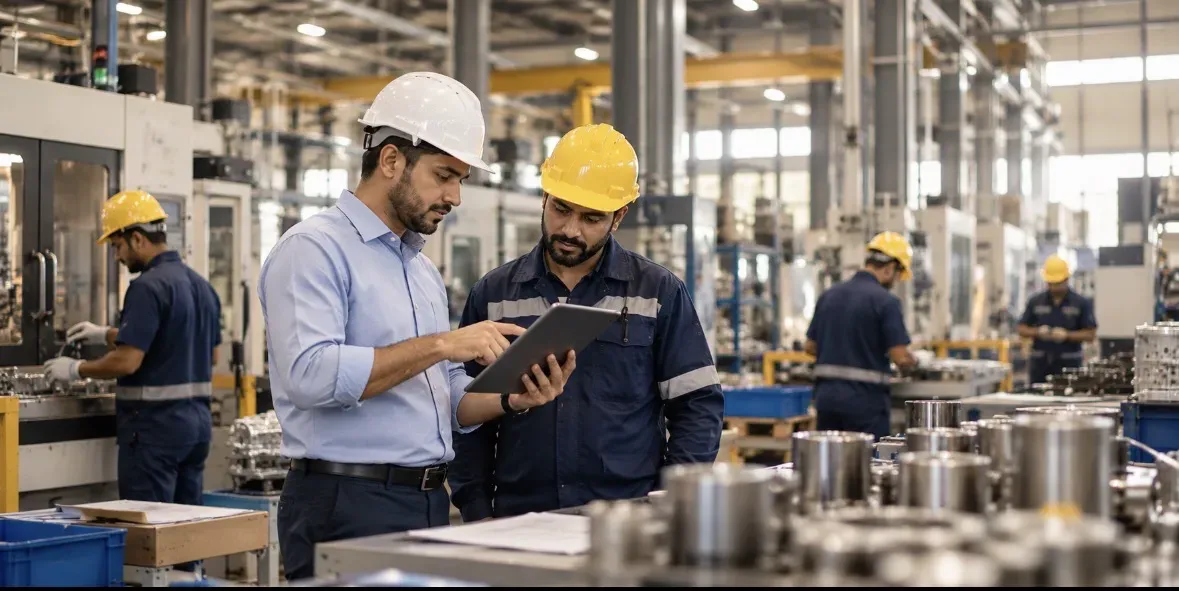
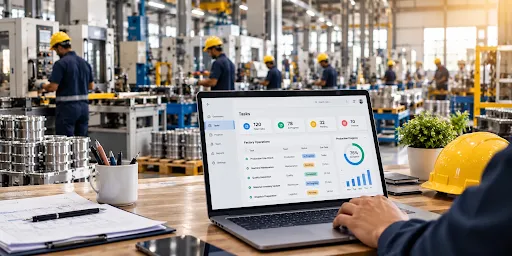
Key Takeaways
Task management software helps manufacturing companies assign work, set deadlines, track completion, and follow up on pending activities.
Digital task tracking can improve coordination between production, maintenance, quality control, warehouse, and administrative teams.
Replacing scattered spreadsheets, paper checklists, and manual follow-ups with a shared system makes it easier to identify delays and unresolved issues.
Digital proof of work, task updates, and approval workflows help managers verify completion instead of relying only on verbal updates.
The right software should fit existing manufacturing processes and support employees on the factory floor without adding unnecessary administrative work.
TrackerSuite.ai helps businesses manage tasks, workforce activities, approvals, reminders, and work validation in one platform.
Introduction
A manufacturing plant depends on hundreds of activities happening at the right time. Production teams need to complete assigned work, maintenance teams must address equipment issues, quality teams need to finish inspections, and supervisors must ensure that pending activities do not affect the next shift.
The challenge is not always knowing what needs to be done. It is making sure every task reaches the right person, gets completed on time, and is properly recorded.
Many manufacturing companies still depend on Excel sheets, paper registers, phone calls, and WhatsApp messages to coordinate daily work. As operations expand across departments, shifts, and locations, these methods can make it harder to track progress and identify delays.
Task management software for manufacturing companies provides a structured way to assign work, monitor deadlines, record updates, and follow up on incomplete activities. It helps managers see what is happening across teams without repeatedly asking employees for status updates.
Why Do Manufacturing Companies Struggle to Track Daily Tasks?
Manufacturing operations involve multiple teams working toward the same production goals. However, each department has different responsibilities, schedules, and dependencies. A delay in one activity can affect several others.
1. Tasks Are Spread Across Spreadsheets and Messages
A production supervisor might maintain a spreadsheet for daily activities, while the maintenance team uses a separate register and the quality team shares inspection updates through email or WhatsApp.
Each team may have the information it needs, but managers often lack a single view of outstanding work. They may need to contact different employees to confirm whether an inspection is complete, a repair is finished, or a pending approval has been received.
This makes routine follow-ups time-consuming and increases the risk of overlooking important activities.
2. Responsibilities Are Not Always Clear
A task may be discussed during a meeting without a clear owner or deadline. Employees may assume someone else is responsible, especially when work passes between shifts or departments.
For example, if a machine operator reports an equipment problem, the maintenance team needs to know who will inspect it, how urgently it needs attention, and who will confirm that the issue has been resolved.
Clear task ownership helps prevent activities from remaining pending because everyone assumes someone else will handle them.
3. Shift Handovers Can Leave Gaps
Manufacturing plants often operate across multiple shifts. The incoming team needs accurate information about completed work, unresolved issues, inspections, and activities that require attention.
When updates are recorded informally or communicated verbally, important details can be missed. The next shift may repeat work, delay an action, or spend time finding out what happened earlier.
A shared task record gives employees a consistent reference for task status, assigned responsibility, deadlines, and previous updates.
4. Managers Discover Delays Too Late
A task can remain incomplete for hours before a supervisor learns about it. This may happen when an employee is occupied with another activity, a required approval is pending, or a dependency has not been resolved.
Without timely updates and clear escalation processes, managers often spend more time identifying problems than resolving them.
Task management software makes pending and overdue activities easier to identify, allowing supervisors to intervene before a delay affects other work.
What Is Task Management Software for Manufacturing Companies?
Task management software is a digital system that helps businesses create tasks, assign responsibilities, set deadlines, track progress, and maintain records of completed work.
In a manufacturing environment, teams can use it to coordinate routine operational activities such as:
Equipment inspections
Housekeeping checks
Quality reviews
Maintenance follow-ups
Safety observations
Documentation
Shift-related responsibilities
Instead of maintaining separate task lists and chasing updates manually, managers can use a shared system to understand which activities are assigned, in progress, completed, or overdue.
For example, a factory supervisor can assign a daily inspection to a specific employee, set a completion deadline, and request a photo or document as proof. The employee can update the task, and the supervisor can review the submission before approving it.
The exact workflows depend on the software and how the company configures its processes.
Task Management Software vs. MES and ERP Software
It is important to distinguish task management software from manufacturing execution systems (MES) and enterprise resource planning (ERP) software.
Task Management Software: Focuses on coordinating assigned work, tracking deadlines, and monitoring task completion.
Manufacturing Execution System (MES): Can monitor and manage production execution.
Enterprise Resource Planning (ERP) Software: Typically connects functions such as inventory, purchasing, finance, and production planning.
These systems can complement one another rather than serve as direct replacements.
Frequently Asked Questions
1. What Is the Best Task Management Software for Manufacturing Companies?
The best software depends on your operational requirements. Look for task assignment, deadline tracking, reminders, approval workflows, proof of work, mobile access, and reporting.
If you need production scheduling, machine monitoring, or complex maintenance management, check whether you also need a dedicated MES, CMMS, or ERP system.
2. How Does Task Management Software Help Manufacturing Companies Reduce Delays?
It makes task ownership, deadlines, and pending work more visible. Automated reminders and escalation workflows can help teams address overdue activities earlier, while shared task records reduce the need to collect updates manually.
The actual impact depends on how consistently the team uses the system and how effectively managers respond to delays.
3. Can Task Management Software Be Used for Machine Maintenance?
Yes. It can help assign routine maintenance-related activities, schedule inspections where supported, record updates, and track follow-ups.
Manufacturers with complex asset management, spare-parts planning, or predictive maintenance requirements may need dedicated maintenance software as well.
4. Can Manufacturing Teams Use Task Management Software Across Multiple Shifts?
Yes, provided the software supports the required access and reporting workflows. Teams can record task status, outstanding work, deadlines, and handover notes so that the next shift can review unresolved activities.
5. Can Task Management Software Track Employee Work and Attendance?
Some platforms combine task management with workforce management features.
TrackerSuite.ai’s Task Tracker supports employee attendance, task assignments, reminders, approvals, timesheets, and work-related tracking. Businesses should evaluate the specific attendance and reporting features they require before implementation.
6. What Is the Difference Between Task Management Software and Manufacturing ERP Software?
Task management software focuses on assigning and tracking work. Manufacturing ERP software typically manages broader business processes such as production planning, procurement, inventory, finance, and order management.
Both can be used together, depending on the company’s needs.
7. Is Task Management Software Suitable for Small and Medium-Sized Manufacturers?
Yes. Small and medium-sized manufacturers can use it to organize daily responsibilities, reduce manual follow-ups, and create consistent task records.
A practical starting point is one workflow or department, followed by gradual expansion as employees become comfortable with the system.
Conclusion
Manufacturing operations depend on more than machines, materials, and production schedules. They also depend on people completing the right activities, following procedures, communicating issues, and handing work over correctly.
When task updates are spread across spreadsheets, paper records, and messages, managers can struggle to identify delays and confirm completion. Task management software for manufacturing companies provides a more structured way to assign work, track deadlines, record evidence, and follow up on unresolved activities.
The first step is to identify where your current process loses time or visibility. Start with a workflow that matters to your operations, establish clear responsibilities, and measure whether the new system improves task completion and reduces manual follow-ups.
TrackerSuite.ai can help manufacturing businesses organize daily tasks and workforce activities in one place, with reminders, approvals, proof of work, and AI Work Validation to support configured review processes.
Explore TrackerSuite.ai to see how digital task management can help your manufacturing team coordinate daily work and gain better visibility into task completion.
Research Sources
World Economic Forum:Views from the Manufacturing Front Line: Workers’ Insights on How to Introduce New Technology. Research on introducing technology in ways that account for frontline workers.
McKinsey:Digital Collaboration for a Connected Manufacturing Workforce. Discusses coordination challenges, manual handovers, and opportunities to connect digital collaboration with operational workflows.
NIST:The Present Status and Future Growth of Maintenance in U.S. Manufacturing. Research on manufacturing maintenance practices and technology adoption.
Leave a Reply