Key Takeaways
- Solar companies manage several activities at once, including site surveys, installations, inspections and maintenance visits.
- Task management software helps teams assign work, track deadlines and check task status from one place.
- Solar EPC companies can use digital task workflows to coordinate site engineers, installation crews and project managers.
- Photo and video proof of work can help managers review completed activities without relying only on phone calls and messages.
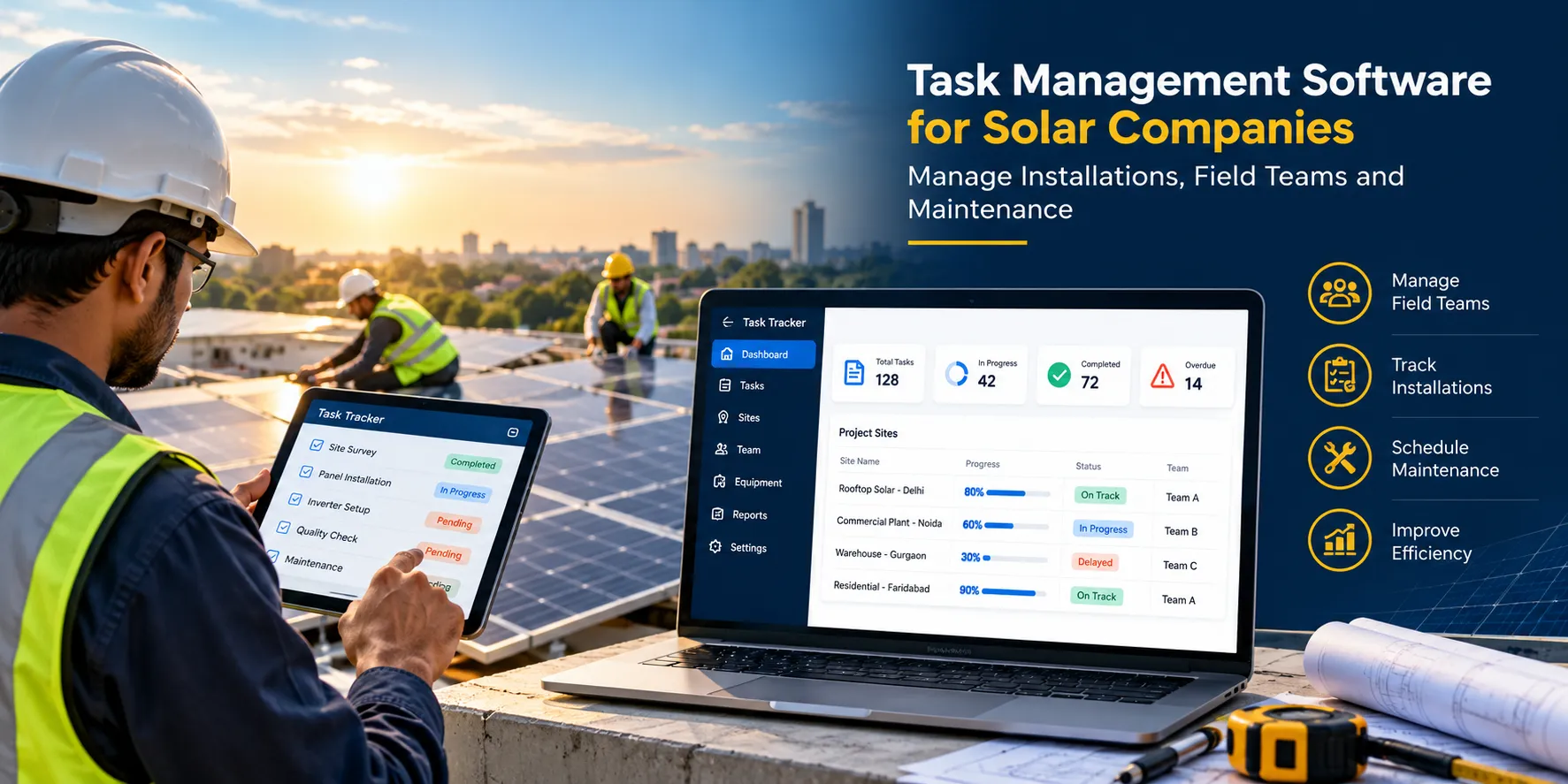
- Task Tracker by TrackerSuite.ai helps businesses manage tasks, field teams, reminders, approvals and proof of work through a centralized platform.
Introduction
A solar installation involves more than mounting panels on a roof. Teams must complete site surveys, arrange materials, assign technicians, coordinate installation work and confirm that each activity is complete.
When a company manages several projects at once, keeping track of every task becomes harder. Updates may sit in WhatsApp groups, deadlines may live in spreadsheets, and managers may need to call employees to check progress.
Task management software for solar companies brings these activities into one organized workflow. It helps teams understand what needs to be done, who is responsible and which tasks still need attention.
Why Do Solar Companies Need Task Management Software?
Solar companies work across offices, warehouses, customer locations and installation sites. Each location may have different teams, deadlines and requirements.
India’s rooftop solar market provides a useful example of the scale of this work.
According to the Ministry of New and Renewable Energy, the PM Surya Ghar: Muft Bijli Yojana had covered 23,96,497 households through installed rooftop solar systems as of December 3, 2025. The scheme aims to reach one crore households by FY 2026–27.
Source: Ministry of New and Renewable Energy, Press Information Bureau.
As solar companies take on more projects, they need clear ways to organize daily work and follow up on pending activities.
1. Manage Multiple Solar Installation Projects
A solar EPC company may handle residential rooftop installations, commercial projects and industrial solar installations at the same time.
Each project follows a series of activities, such as:
- Conducting a site survey.
- Checking roof conditions and installation requirements.
- Coordinating equipment and materials.
- Assigning installation technicians.
- Completing installation and inspection tasks.
- Collecting completion documents and photos.
- Closing pending activities after installation.
If teams track these activities separately, managers may struggle to see the status of every project.
Task management software lets managers organize work into individual tasks, assign owners and set due dates. They can review progress without asking every team member for a separate update.
2. Reduce Manual Follow-Ups
Project managers often spend time asking employees whether a site visit is complete, whether materials have arrived or whether an inspection report has been submitted.
These follow-ups take time, especially when teams work across several locations.
A digital task management system gives employees a place to update task status. Managers can review pending work and use reminders to follow up on activities that need attention.
This creates a more organized way to manage daily operations.
3. Keep Project Updates in One Place
Important project information can become scattered across spreadsheets, phone calls, emails and messaging groups.
For example, an installation supervisor may share photos in one WhatsApp group while the project manager tracks deadlines in a spreadsheet. The operations team may then need to collect information from both places to understand what happened at the site.
A centralized task management platform helps teams maintain task status, assignments, deadlines and supporting updates in one system.
How Task Management Software Supports Solar Installation Projects
A solar installation has several stages. Task management software helps teams organize the work required at each stage.
Site Survey and Inspection Task Tracking
Before installation begins, teams may need to visit the customer’s property, inspect the site and record installation requirements.
A manager can create a site survey task, assign it to a field engineer and set a completion deadline. The engineer can update the task after the visit and submit the required information or proof of work.
The task can then move to the next responsible person for review or follow-up.
This makes it easier to track which site surveys are complete and which still need attention.
Solar Panel Installation Scheduling
Once a project is ready for installation, the operations team must coordinate technicians, supervisors and other assigned workers.
Task management software helps managers:
- Assign installation tasks to the responsible team.
- Set expected completion dates.
- Track progress as work moves forward.
- Identify overdue or pending activities.
- Send reminders where required.
- Review submitted proof of work.
Managers can also break a large installation into smaller tasks. This makes responsibilities clearer and helps teams understand what they need to complete at each stage.
Inspection and Project Handover
Installation work may require several checks before the project can be handed over to the customer.
Teams can create separate tasks for inspection, documentation, outstanding work and final review. Each task can have its own owner and deadline.
If an inspection identifies an issue, the manager can assign a follow-up task to the appropriate employee and track it until the team records completion.
The exact workflow will depend on the company’s project requirements and inspection procedures.
How to Manage Solar Field Teams Across Multiple Locations
Solar installation and maintenance teams often travel between customer sites. Managers may not be physically present at every location, so they need reliable task updates from the field.
Assign Work Based on Responsibility
A manager can assign site visits, installation activities and maintenance jobs to specific employees or teams.
Each employee knows which task they own and when it is due. Managers can review task assignments and identify work that still needs attention.
Clear ownership also makes it easier to coordinate handovers between surveyors, installation teams and inspection staff.
Track Field Activity and Attendance
Field managers may need to review attendance, assigned tasks and work completed during the day.
Task Tracker includes workforce management capabilities such as attendance tracking, task assignment and proof-of-work submission. Depending on the company’s configuration, managers can use these capabilities to maintain visibility into field activity.
Where geo-fenced attendance is configured, businesses can use location-based attendance rules for designated sites. These records should be used according to the company’s attendance policies and applicable privacy requirements.
Manage Work Across Cities and Regions
A solar company operating across multiple cities may have different supervisors and installation crews in each region.
A centralized task management platform helps managers review assignments and task status across those teams. Regional supervisors can focus on their assigned work while operations managers maintain a broader view of pending activities.
This is especially useful when teams need to coordinate work across customer locations without depending entirely on repeated calls and messages.
How Photo and Video Proof of Work Helps Solar Companies
Solar installation work takes place at customer sites, often away from the project manager’s office. A task marked as complete may need supporting information before another team can proceed.
Photo and video submissions can help provide that context.
For example, a company may ask its field team to submit:
- Site survey photographs.
- Images of completed installation activities.
- Photos showing the status of outstanding work.
- Inspection documents or other required records.
- Supporting evidence for a maintenance visit.
The manager can review the submitted material and follow up if anything is missing.
Task Tracker also offers AI Work Validation, which checks submitted images, videos or documents against configured criteria and can flag submissions for review. This capability can help teams review proof of work, but it should not replace qualified technical inspections or required safety checks.
Clear submission requirements are important. Teams should know which photos or documents they must provide and what the reviewer needs to verify.
How Task Management Software Supports Solar Maintenance
A solar company’s work does not always end when installation is complete. Depending on the service agreement, teams may need to conduct inspections, respond to customer requests or perform scheduled maintenance.
Without a clear system, maintenance requests can become difficult to track as the number of installed systems grows.
Schedule Preventive Maintenance Tasks
Preventive maintenance involves planned checks and service activities carried out according to an established schedule.
A company can organize these activities into tasks, assign technicians and set due dates. Managers can review upcoming visits and follow up on overdue work.
For recurring maintenance, the company should configure repeat schedules or task creation according to the software’s available functionality.
Track Customer Service Requests
When a customer reports an issue, the service team needs to know who will handle it and what action is pending.
A task can record the reported issue, responsible technician, target date and current status. The technician can update the task after visiting the site and submit the required supporting information.
Managers can then review open requests and identify jobs that need further action.
Maintain a Record of Completed Work
A structured task history helps teams review previous activities and outstanding requests.
Depending on how the company configures its records, this history can include task assignments, status updates, completion dates and submitted documents.
It can also help managers identify recurring follow-up requirements and plan future work more systematically.
Task management software is not a substitute for solar plant monitoring systems. Monitoring tools track system performance and energy output, while task management tools organize the people and activities involved in installation, inspection and maintenance.
How Task Tracker by TrackerSuite.ai Helps Solar Companies
Task Tracker is designed to help businesses organize tasks and manage workforce activities. Solar companies can apply these capabilities to their installation and field operations.
Centralized Task Assignment
Managers can assign work, set deadlines and track task status through a centralized system. This helps employees understand their responsibilities and gives managers a clearer view of pending activities.
Reminders and Follow-Ups
Task reminders and notifications help employees stay aware of assigned work and approaching deadlines. Managers can use task status to identify activities that need additional attention.
Approvals and Reassignment
When a task needs review or another employee must take over, task approval and reassignment workflows can help the business coordinate the next step.
For example, an installation completion task may need supervisor review before the project team proceeds with the next activity.
Proof-of-Work Submission and AI Validation
Employees can submit supporting images, videos or documents for review. AI Work Validation can check submissions against configured criteria and flag items for further attention.
This can help organize proof-of-work reviews. It does not establish that an installation is electrically safe or technically compliant without the appropriate inspection.
Workforce and Field Activity Visibility
Attendance, task tracking and related workforce capabilities help managers coordinate employees working across locations.
Together, these features can support a more organized approach to daily solar operations. The precise setup should reflect the company’s installation stages, maintenance requirements and reporting needs.
How to Choose Task Management Software for a Solar Company
Not every solar business needs the same software. A rooftop installer with a small team may have different requirements from an EPC company managing commercial projects across several states.
Before selecting a platform, consider these questions.
1. Can You Assign Tasks to Specific Employees?
The system should make task ownership, deadlines and status easy to understand.
2. Can Managers Track Work Across Locations?
Check whether the platform provides the views and reporting needed to review tasks across teams and sites.
3. Can Employees Submit Proof of Work?
Confirm whether the software supports the images, videos and documents your workflows require.
4. Does It Support Reminders and Approvals?
These capabilities can help teams follow up on pending work and coordinate reviews.
5. Can You Adapt Workflows to Your Operations?
Review whether you can configure tasks, responsibilities and approval steps around your existing processes.
6. Does It Work Alongside Your Other Solar Systems?
Task management software does not necessarily replace solar design tools, CRM systems, inventory platforms or energy monitoring software. Check integration requirements before making a decision.
7. Can Your Team Use It Consistently?
A system is useful only when employees can understand the workflow and update their tasks as part of their daily work.
Frequently Asked Questions About Task Management Software for Solar Companies
What Is Task Management Software for Solar Companies?
Task management software helps solar businesses assign work, set deadlines, track task status and coordinate employees. Teams can use it for site surveys, installation activities, inspections, documentation and maintenance tasks.
How Can Solar EPC Companies Track Installation Progress?
Solar EPC companies can divide each project into smaller tasks, assign responsible employees and set deadlines. Managers can review status updates, check overdue tasks and follow up on incomplete activities.
Can Task Management Software Help Manage Solar Field Teams?
Yes. Depending on the platform, businesses can use task assignment, reminders, attendance tracking, proof-of-work submissions and reporting to coordinate employees working at different sites.
Is Task Management Software the Same as Solar Monitoring Software?
No. Solar monitoring software focuses on system performance, such as energy generation and equipment data. Task management software focuses on work assignments, field activities, deadlines and task completion.
Can Task Tracker Be Used for Solar Installation and Maintenance?
Task Tracker’s task management and workforce capabilities can be applied to solar installation and maintenance workflows. Businesses should map their specific processes and confirm any required configuration before implementation.
What Should a Solar Company Look for in Task Management Software?
Look for clear task assignments, deadlines, status tracking, reminders, approvals, proof-of-work capabilities, field workforce visibility and suitable reporting. The right choice depends on team size, project complexity and existing systems.
Conclusion: Bring Solar Field Operations Into One Workflow
Managing solar projects requires coordination between office teams, site engineers, installation crews and service technicians. As work spreads across locations, clear task ownership and timely updates become increasingly important.
Task management software helps solar companies organize these activities, track pending work and maintain a shared view of task progress.
Task Tracker by TrackerSuite.ai provides task assignment, reminders, workforce management, approvals and proof-of-work capabilities that businesses can apply to their operational workflows.
For solar companies looking to move beyond scattered spreadsheets and repeated manual follow-ups, the first step is to map their daily work and identify where a structured task management system can help.
Explore Task Tracker by TrackerSuite.ai to see how it can fit into your solar company’s workflow.
Leave a Reply