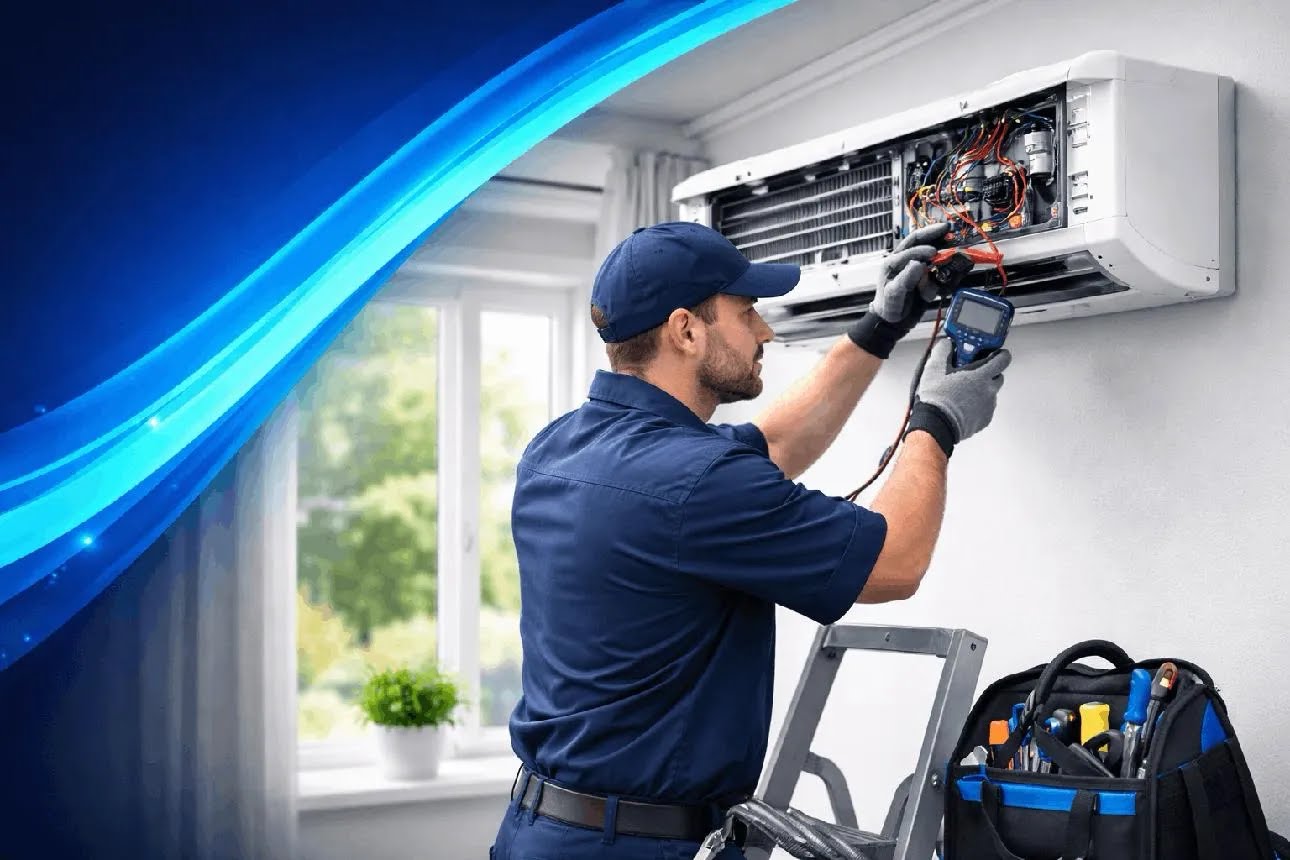
HVAC companies manage multiple service jobs, technicians, and customer locations every day. From air conditioner installations and heating system repairs to preventive maintenance and equipment inspections, every activity requires proper coordination.
A technician may visit one location for an AC installation in the morning and travel to another site for a maintenance request in the afternoon. Meanwhile, the office team needs to schedule new jobs, arrange equipment, follow up with customers, and check whether previous work has been completed.
When these activities are managed through phone calls, WhatsApp messages, spreadsheets, and paper registers, it becomes difficult to track every responsibility. A delayed technician visit, missed maintenance schedule, or incomplete service report can affect customer satisfaction and business operations.
Task management software for HVAC companies helps bring these activities into one organised system. Managers can assign jobs, set deadlines, track employee progress, and receive updates from technicians working at different locations.
With AI-powered features, HVAC businesses can also review submitted work, identify recurring delays, and make better decisions about workforce planning.
Key Takeaways
- HVAC companies manage installation, repair, maintenance, and inspection jobs across multiple customer locations.
- Task management software helps assign jobs, track technician activities, and monitor deadlines.
- Automated reminders reduce manual follow-ups and help teams complete scheduled maintenance on time.
- Mobile task updates and photo submissions give managers better visibility into fieldwork.
- Employee attendance, timesheets, and performance reports help HVAC companies manage their workforce.
- AI-powered task insights can help identify delays, workload issues, and recurring operational problems.
Why Do HVAC Companies Need Task Management Software?
HVAC businesses handle several types of work, including:
- Air conditioner installation and replacement
- Heating and cooling system repairs
- Preventive maintenance visits
- Commercial HVAC servicing
- Equipment inspections
- Emergency repair requests
- Customer site visits and follow-ups
Each activity involves different employees, deadlines, and work requirements.
For example, consider an HVAC company handling maintenance contracts for 30 commercial buildings. Every building may have different inspection dates, equipment requirements, and service responsibilities.
If the company manages these activities through spreadsheets and phone calls, managers may struggle to identify which visits are completed, which technicians are available, and which maintenance jobs are overdue.
Task management software helps organise these activities through a central dashboard. Managers can assign jobs, add instructions, set priorities, and monitor completion. Technicians can access their assigned tasks, update progress, and submit work reports from the field.
This gives the business better control over daily operations without depending on repeated manual communication.
Common Problems HVAC Companies Face Without Task Management Software
1. Poor Scheduling and Job Allocation
HVAC companies often manage multiple service requests across different locations.
Managers need to decide which technician should visit each customer, when the work should happen, and how urgent the request is. When job assignments are shared through calls or messages, technicians may receive incomplete instructions or conflicting schedules.
A task management tool allows managers to assign jobs with clear instructions, locations, priorities, and deadlines. Technicians can check their assigned tasks and update job progress.
2. Difficulty Tracking Field Technicians
HVAC technicians spend much of their working day travelling between customer locations and completing on-site work.
Managers may not always know whether a technician has reached the assigned location, started the job, or completed the work.
Without a proper tracking process, supervisors need to make repeated calls to collect updates.
Mobile task management software helps technicians update their work status and submit completion reports. Location-based attendance and geo-fencing can also help companies manage field employee attendance according to their policies.
3. Missed Preventive Maintenance Schedules
HVAC systems require regular inspections and maintenance to maintain their performance.
Companies managing multiple residential and commercial clients need to remember different service dates, inspection schedules, and maintenance requirements.
When these schedules are maintained manually, some visits may be delayed or overlooked.
Task management software helps companies create recurring maintenance tasks, assign technicians, set deadlines, and send reminders before scheduled visits.
4. Incomplete Service Reports and Work Updates
After completing an installation or repair, technicians may need to submit photographs, inspection details, and service reports.
When these updates are shared through different messaging groups, managers may find it difficult to locate the correct information.
A digital task tracker keeps work updates attached to the assigned activity. Technicians can upload photographs, videos, and documents, while supervisors can review the submitted information.
5. Difficulty Managing Employee Workloads
Some technicians may handle several service requests in one day, while others may have fewer assignments.
Without clear task allocation, managers may struggle to distribute work according to employee availability and responsibilities.
A task management system helps managers review assigned work, check pending activities, monitor employee performance, and reassign tasks when required.
6. Too Much Time Spent on Manual Follow-Ups
Office teams often spend time contacting technicians to ask about job status, customer visits, pending reports, and maintenance completion.
These repeated follow-ups take time away from scheduling new jobs and managing customer requirements.
Automated notifications and task updates help reduce unnecessary communication. Managers can check the dashboard to identify pending and overdue activities.
Statistics: Operational Challenges in the HVAC and Field Service Industry
The need for better task coordination is also reflected in industry research.
Some findings reported across the HVAC, trades, and field service industries include:
- 49% of surveyed technicians reported frustration with excessive paperwork, according to ServiceTrade’s 2025 Technician Insights Report, referenced by SMACNA.
- 22% of surveyed technicians identified poor communication with office teams as a source of frustration, according to the same research.
- 47% of field service appointments reportedly do not go according to schedule, according to a 2025 Salesforce survey of tradespeople and technicians.
- More than seven hours per week are spent by surveyed tradespeople and technicians on inefficient or low-value tasks, such as manual data entry and job summaries, according to Salesforce.
- 35% of home service contractors identified scheduling and time management as a common winter challenge in a 2023 industry survey.
These findings highlight the time lost through paperwork, communication gaps, and scheduling problems.
For HVAC companies, better task allocation, digital work updates, and automated reminders can help address these operational challenges.
How Task Management Software Helps Different HVAC Teams
HVAC companies have several teams working together. A task management system helps each team organise its responsibilities.
1. Installation Teams
Installation projects involve multiple activities, including site inspections, equipment delivery coordination, installation, testing, and final reporting.
Managers can break an installation project into smaller tasks and assign them to technicians.
For example:
- Complete the site inspection.
- Confirm installation requirements.
- Coordinate equipment availability.
- Assign the installation team.
- Complete the installation.
- Upload photographs and submit the work report.
This makes it easier to track each stage of the installation.
2. Repair and Service Teams
Repair teams handle customer complaints, equipment failures, and urgent service requests.
Managers can assign repair requests to technicians, add problem descriptions, set priorities, and monitor progress.
Technicians can update the status after reaching the location, inspecting the system, and completing the repair.
3. Preventive Maintenance Teams
Preventive maintenance teams follow regular schedules for cleaning, inspections, servicing, and equipment checks.
A task tracking tool helps companies create recurring activities, assign responsibilities, and send reminders before service dates.
Managers can also review previous maintenance records and identify incomplete activities.
4. Field Supervisors
Field supervisors coordinate technicians working across multiple customer locations.
They need to review job progress, check employee availability, and resolve delays.
With mobile task updates, attendance records, and performance reports, supervisors can get a clearer view of field operations.
5. Office and Administrative Teams
Office employees manage service requests, employee attendance, approvals, timesheets, and daily reports.
A central task management system helps them assign responsibilities, track pending work, and coordinate with field teams.
This reduces the need to maintain separate records for every activity.
Important Features to Look for in Task Management Software for HVAC Companies
Before selecting a solution, consider the features your technicians, supervisors, and office employees need to manage daily work.
1. Task Assignment and Scheduling
Managers should be able to create jobs, assign technicians, set deadlines, and add service instructions.
Each employee should have a clear view of their assigned responsibilities and pending activities.
2. Mobile Task Tracking
Technicians should be able to access their assigned jobs, update progress, and submit reports through their mobile devices.
This is particularly useful for teams working across different customer locations.
3. Automated Reminders and Notifications
Automated reminders help technicians stay updated about upcoming service visits, maintenance schedules, and pending activities.
Managers can also receive notifications when important tasks become overdue.
4. Geo-Location and Geo-Fenced Attendance
Location-based attendance helps companies record employee attendance at customer sites or designated work locations.
Geo-fencing allows businesses to define location boundaries and manage attendance according to their field workforce policies.
5. Digital SOPs and Checklists
HVAC companies can create digital checklists for installation, maintenance, inspection, and repair activities.
For example, an AC maintenance checklist may include:
- Check air filters.
- Inspect electrical connections.
- Clean the required components.
- Check refrigerant-related parameters according to approved procedures.
- Test system operation.
- Submit the service report.
Digital checklists help technicians follow the company’s defined work process.
6. Photo and Document-Based Work Validation
Some service jobs require photographs, videos, or documents as proof of completion.
Software with work validation features can help managers review submitted evidence against predefined requirements.
This makes it easier to identify incomplete submissions and request corrections.
7. Employee Attendance and Timesheets
Managers need to understand employee attendance and the time spent on assigned work.
Attendance management and timesheets help HVAC companies maintain employee records, review working hours, and manage approvals.
8. Employee Performance Reports
Task reports help managers review how many jobs employees complete, which tasks remain pending, and where delays occur.
These insights can support better workload distribution and employee performance reviews.
9. AI-Powered Task Suggestions and Analytics
AI-powered features can analyse previous task records and help managers identify recurring patterns.
For example, AI may highlight technicians with consistently high workloads, frequently delayed activities, or maintenance tasks that regularly remain incomplete.
These insights can support better workforce planning and operational decisions, depending on the platform’s capabilities and available data.
Important: Task management software is not necessarily a replacement for dedicated field service management software. If your company needs advanced technician dispatching, route optimisation, customer portals, service contracts, or invoicing, check whether those capabilities are included or require a separate system.
How to Implement Task Management Software in an HVAC Company
Introducing new software does not require changing every business process at once. HVAC companies can start with a few regular activities and expand gradually.
Step 1: Identify Activities That Need Better Tracking
List the activities that involve repeated follow-ups, multiple technicians, or fixed deadlines.
Start with installation jobs, repair requests, and preventive maintenance.
Step 2: Assign Clear Responsibilities
Decide which technician or supervisor will handle each activity. Add job instructions, priorities, and deadlines.
Step 3: Create Digital Workflows
Convert recurring activities into digital tasks and checklists. Include the steps employees need to follow and the information they must submit.
Step 4: Train Field Employees
Show technicians how to access assigned jobs, update progress, record attendance, and upload completion reports.
Step 5: Monitor Task Performance
Review completed jobs, pending activities, employee workloads, and recurring delays. Use these reports to improve daily operations.
Step 6: Expand Across Teams
Once employees are comfortable with the system, introduce it to other departments and service teams.
How TrackerSuite.ai Helps HVAC Companies Manage Daily Operations
HVAC companies need to coordinate field technicians, office employees, service activities, and daily workflows.
TrackerSuite.ai provides an AI-powered platform that helps businesses manage tasks, employees, workflows, and daily operations in one place.
Its task tracking and workforce management capabilities can support HVAC companies in organising fieldwork and improving visibility into employee activities.
Here is how its features can support HVAC operations:
- Task Assignment and Tracking: Assign installation, repair, and maintenance activities to employees with clear deadlines and instructions.
- Automated Reminders: Notify technicians about upcoming jobs and pending activities.
- Geo-Location and Geo-Fencing: Track field employee locations and manage attendance at designated work locations.
- Digital SOPs and Checklists: Create standard processes for installation, maintenance, and inspection activities.
- Photo and Document Updates: Allow technicians to submit photographs, videos, and documents as work evidence.
- AI Work Validation: Review submitted work against predefined requirements and flag submissions for approval or rejection.
- Employee Management: Manage attendance, timesheets, approvals, and employee responsibilities.
- AI-Powered Task Suggestions: Get task suggestions based on previous work, employee roles, and team experience, where supported.
- Performance Analytics: Review task completion, employee workloads, and recurring operational delays.
These capabilities can help HVAC companies reduce manual follow-ups, organise technician responsibilities, and manage daily work more efficiently.
For example, an HVAC supervisor can assign a preventive maintenance visit to a technician, add an inspection checklist, set a deadline, and request photo evidence after the work is completed. The supervisor can then review the task status and submitted information from a central dashboard.
For advanced dispatching, route optimisation, technical diagnostics, or service billing, HVAC businesses should separately assess whether dedicated field service or HVAC business management software is also required.
Frequently Asked Questions
1. What Is Task Management Software for HVAC Companies?
It is software that helps HVAC businesses assign service jobs, manage technician responsibilities, set deadlines, track work progress, and coordinate installation, repair, and maintenance activities.
2. How Does Task Management Software Help HVAC Technicians?
It gives technicians access to assigned jobs, service instructions, deadlines, and checklists. They can update task status and submit work reports or supporting evidence from the field, depending on the software.
3. Can Task Management Software Help Schedule Preventive HVAC Maintenance?
Yes. Software that supports recurring tasks can help companies schedule inspections, cleaning, servicing, and routine equipment checks. Managers can assign technicians, set deadlines, and receive reminders about upcoming or overdue activities.
4. Can HVAC Companies Track Field Employees?
Some task and workforce management platforms support location-based attendance, geo-fencing, and mobile task updates. These features help managers maintain visibility into field activities, subject to employee privacy policies and applicable regulations.
5. Can Task Management Software Improve Technician Productivity?
It can help by clarifying responsibilities, reducing repeated follow-ups, tracking pending work, and improving workload visibility. Actual productivity improvements depend on how consistently the system is used and how well tasks are planned.
6. What Is the Difference Between Task Management and HVAC Field Service Software?
Task management software focuses on assigning work, tracking progress, managing deadlines, and coordinating employees. HVAC field service software may offer additional functions such as technician dispatching, route optimisation, customer management, service contracts, estimates, and invoicing.
7. Can AI Help HVAC Companies Manage Their Work?
AI can support selected workflows such as task suggestions, reporting, identifying recurring delays, and reviewing submitted work evidence. Its usefulness depends on the software’s capabilities, the quality of available data, and the need for human review.
Final Thoughts
HVAC companies handle several service jobs, technicians, and customer locations every day. Managing work through phone calls, messages, and spreadsheets can make it difficult to plan jobs, coordinate employees, and follow up on tasks.
Task management software helps bring daily work into one organised system. Managers can assign jobs, track technician activities, and check which tasks are completed or pending. It also helps teams coordinate installation, repair, and maintenance work more effectively.
With TrackerSuite.ai, HVAC companies can organise daily tasks, manage workforce responsibilities, reduce manual follow-ups, and improve visibility into service activities.
Ready to bring more structure to your HVAC operations? Explore TrackerSuite.ai Task Tracker and see how it can support your team’s daily work.
Leave a Reply