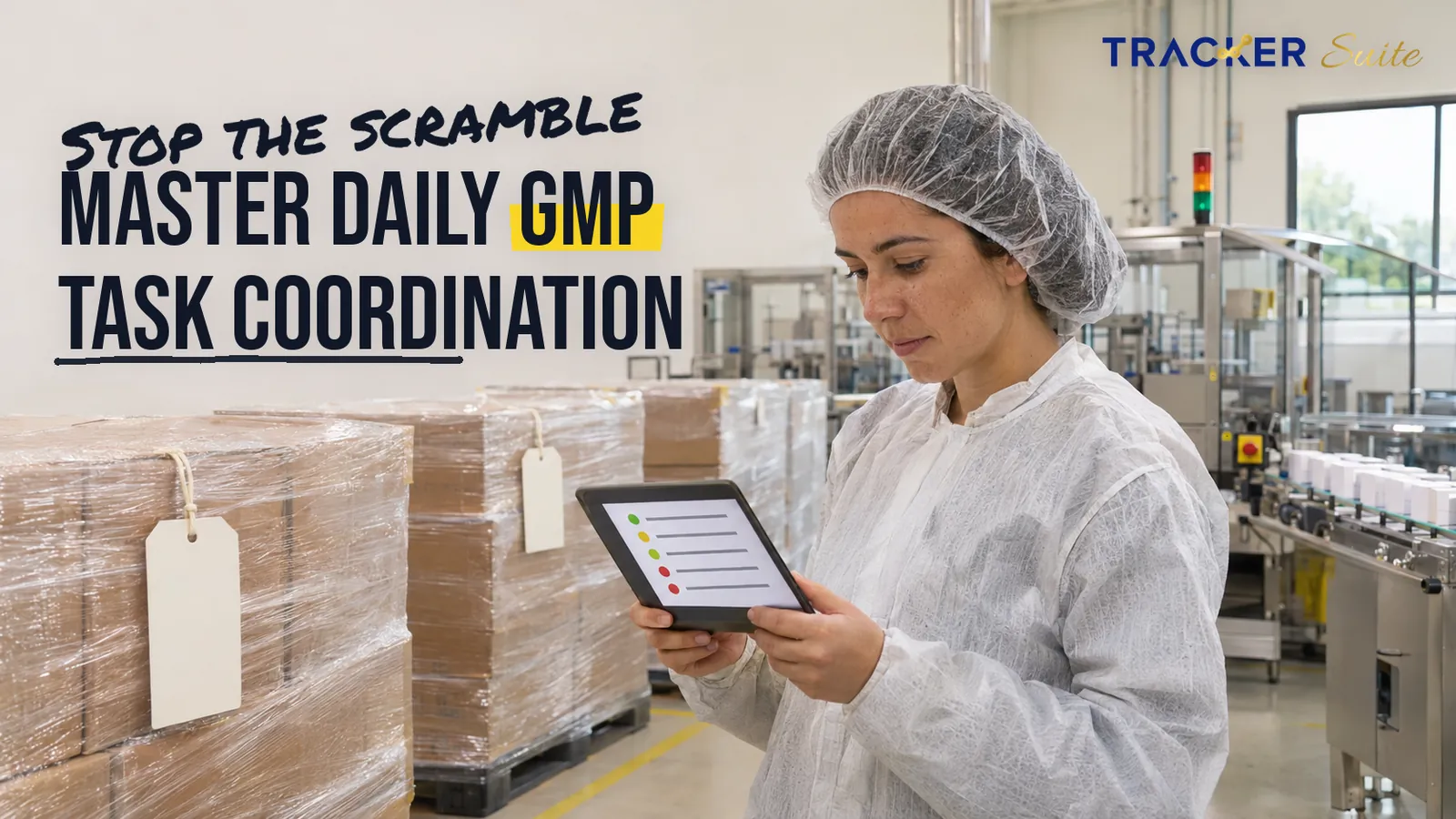
A finished batch sits in quarantine for three extra days. It passed testing, but one deviation is still open, a cleaning log lacks a second signature and a balance calibration lapsed last week. Task management software for pharmaceutical manufacturing exists to stop scattered gaps like these from delaying release. It gives every GMP (good manufacturing practice) follow-up a named owner, a due date and a status that QA and production can both see.
Key takeaways
At a glance
- What it does: Coordinates the human work around batch records, deviations, CAPA, cleaning, calibration and audits. It does not replace a validated QMS, MES, LIMS or electronic batch record system.
- Why it matters now: FDA issued 105 warning letters for drug quality issues in FY2024, the highest in five years (FDA Law Blog, 2025).
- Where scale hurts: Each new shift, line or site adds handovers faster than QA headcount grows.
- Where AI fits: Flagging overdue or at-risk items from your own task data and configured rules. Qualified people keep every release and disposition decision.
- When a simple tool is enough: One small site, one shift and a short list of recurring checks.
What does task management software for pharmaceutical manufacturing actually do?
Task management software for pharmaceutical manufacturing assigns, tracks and reports on the operational follow-ups that surround GMP records. Validated systems, such as the quality management system (QMS) or electronic batch record, still hold the official record. The task layer makes sure the people responsible for closing each item know what is due, when, and what is blocking it.
Consider an oral solid dose plant running three packaging lines across two shifts. Production supervisors execute the batch, QC analysts test samples, engineering maintains and calibrates equipment, the warehouse moves materials and QA reviews everything before release. Every handoff between those teams is a task with an owner and a deadline, whether or not anyone writes it down.
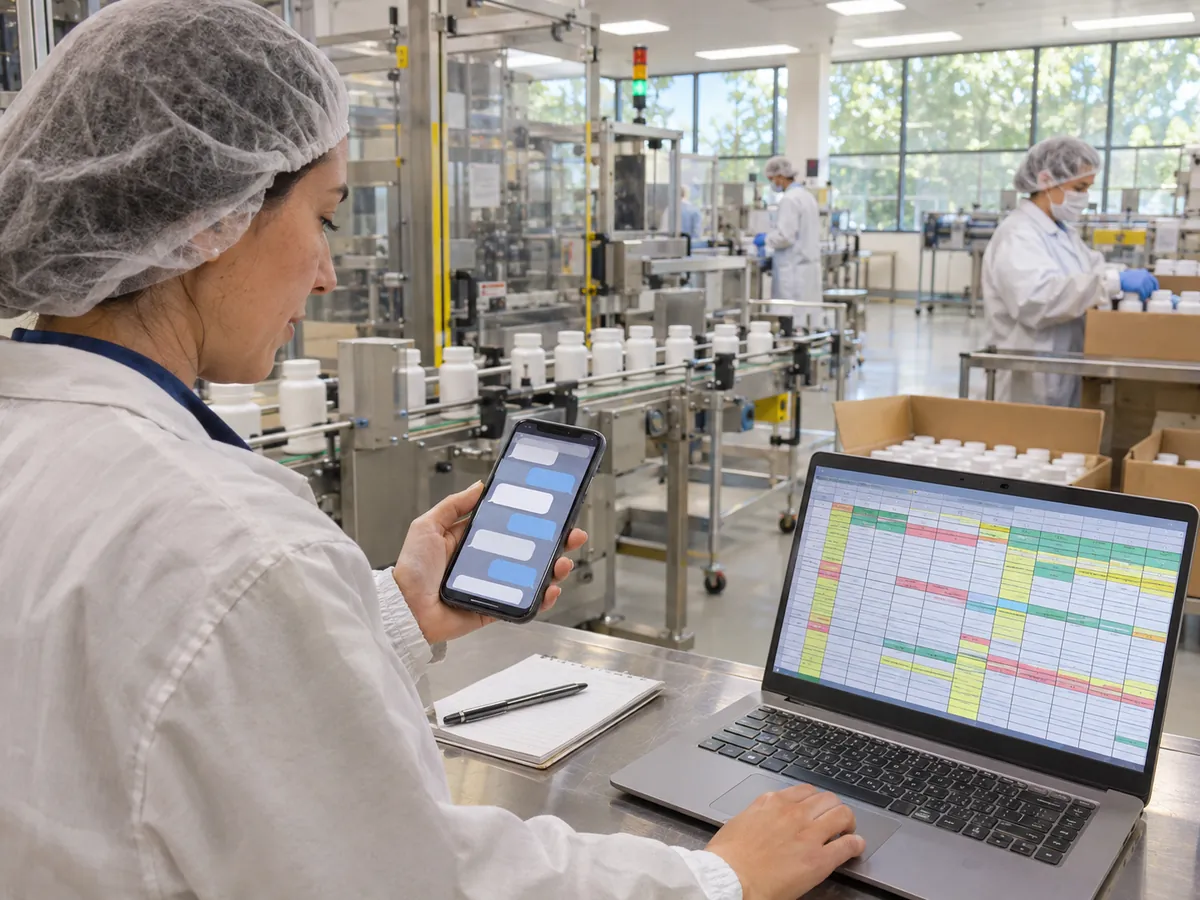
When those tasks live in notebooks, chat threads and personal spreadsheets, nobody sees the full queue. The QA manager then spends the morning phoning supervisors for updates instead of reviewing records. A shared task system turns those phone calls into a visible list that anyone with the right permissions can check.
Why is GMP execution getting harder for pharma manufacturers?
Regulators keep finding problems in exactly the follow-up work that task systems coordinate: investigations that stall, procedures that are not followed and records that are not reviewed. As plants add products, shifts and sites, the number of open items grows faster than the quality team responsible for closing them, so gaps become more likely.
The FDA’s Center for Drug Evaluation and Research (CDER) reported 105 warning letters for quality issues in FY2024, the highest count in five years (FDA Law Blog, 2025). The same report found that 93% of catalogued sites had received a no action indicated or voluntary action indicated classification at their latest inspection. Most plants are in good standing, which means enforcement concentrates on sites where basic controls break down.
The repeat findings are telling. An analysis of FDA inspection records by MedShadow found that inspectors cited 21 CFR 211.22(d) and 21 CFR 211.192 more than 3,200 times between 2014 and 2025, with citations for both rising in 2025 (MedShadow, 2026). Section 211.22(d) requires the quality unit’s responsibilities and procedures to be written and followed. Section 211.192 requires production record review and full investigation of unexplained discrepancies, including whether other batches were affected.
FDA’s data integrity guidance states plainly that ‘FDA expects that all data be reliable and accurate’ (FDA, 2018).
A task tool is not where GMP data lives. However, late follow-ups create pressure to back-fill logs and rush reviews, and that pressure is where data integrity risk often begins. Visible deadlines and early reminders reduce the temptation to complete records after the fact.
Which pharma manufacturing workflows create the most follow-up work?
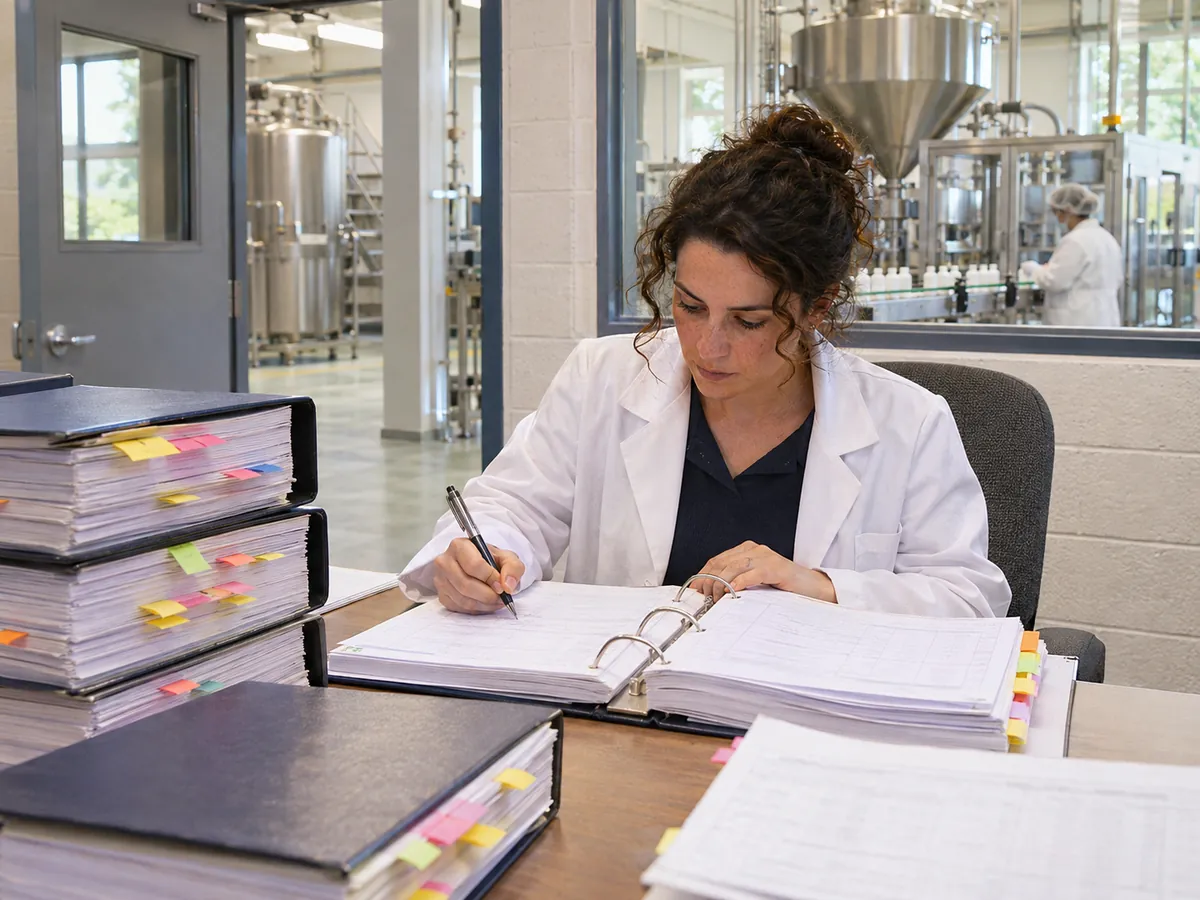
The heaviest follow-up load sits in recurring quality and production workflows that cross departments. Each one generates records, approvals and deadlines, and each one can hold a batch if a single step is missed. The ten workflows below are a practical starting map for most finished-dose and API (active pharmaceutical ingredient) plants.
- Batch record review. QA checks every executed batch manufacturing record (BMR) before release. Corrections go back to production, and each one needs an owner and a closure date.
- Deviations and CAPA. A deviation is any departure from an approved procedure or specification. CAPA, or corrective and preventive action, is the plan that fixes the cause. Investigations, root-cause analysis and effectiveness checks all carry deadlines.
- Change control. Any change to equipment, materials, suppliers or procedures needs impact assessment, approvals and follow-on actions, such as retraining or document updates.
- Equipment cleaning and cleaning validation. Cleaning validation proves that a cleaning procedure reliably removes product residue. Day to day, operators log each clean, and a second person verifies it before the next product runs.
- Calibration and preventive maintenance. Balances, pH meters, temperature probes and HVAC systems follow fixed schedules. An overdue calibration can call into question every result produced since the last valid check.
- Line clearance. Before a new batch starts, teams confirm that no material, labels or documents from the previous batch remain on the line.
- QC sample testing. Samples move from production to the lab for testing. An out-of-specification (OOS) result triggers its own investigation and holds disposition until it closes.
- Raw material and inventory movement. Materials move from quarantine to released stock, then to dispensing, and each status change needs a verified record.
- Shift handovers. Open issues, equipment status and pending checks must pass cleanly from one shift supervisor to the next.
- Audit readiness. Training records, SOP (standard operating procedure) reviews and supplier qualification files must be current before regulators or customers arrive.
Every item on this list produces data: timestamps, approvers, statuses and exceptions. That data is the raw material for visibility, automation and later AI assistance.
Why do spreadsheets and WhatsApp stop working as a plant grows?
Spreadsheets, email and chat groups work well for a single site with one shift and a small QA team. They break down when work crosses more shifts, lines and sites, because nobody owns the master list, updates arrive late and managers spend hours chasing status rather than resolving issues.
The scaling journey usually follows four stages:
- Small operation: One site and one shift. A calibration spreadsheet, a deviation logbook and a WhatsApp group are enough.
- Growing: A second shift and more products. Handovers multiply, and the spreadsheet now has several editors and conflicting versions.
- Complex: Multiple lines or sites, contract manufacturing and customer audits. Approvals queue in inboxes, and monthly quality reports take days to compile.
- Scaled: Connected task data, automated reminders and escalations, and AI-assisted prioritisation, all sitting around validated GMP systems.
Picture 200 employees, three shifts, two sites and thousands of checks every month. These numbers illustrate scale rather than any product’s capacity. At that size, the question shifts from ‘Can we track these tasks?’ to ‘Can anyone see which overdue item is about to hold a batch?’
The change is easiest to see in before and after terms:
- Before: The QA head asks five supervisors whether line clearances are complete. After: One status view shows each line’s clearance, owner and time.
- Before: Engineering tracks calibration dates in a personal workbook. After: Calibration tasks are shared, with reminders before each due date.
- Before: Deviation actions are tracked in meeting minutes. After: Each action has an owner, a due date and an escalation path.
How can automation and AI support pharma operations without replacing QA?
Automation handles the repetitive steps, such as creating scheduled tasks, sending reminders and escalating overdue items. AI can then use the resulting task data and configured rules to highlight what needs attention first. Release, disposition and investigation conclusions stay with qualified people, as GMP requires.
Practical automation in a pharma plant usually means:
- Generating calibration and preventive maintenance tasks from a fixed schedule instead of from memory.
- Sending reminders before a CAPA action or change control step falls due.
- Escalating to the QA manager when a deviation investigation passes its target date.
- Creating a verification task automatically when an operator marks a clean as complete.
- Compiling a weekly summary of open, overdue and closed items for the quality review meeting.
AI adds value only when it is connected to this workflow data. Configured well, it can rank open items by how close they are to blocking a batch. It can also spot a line that repeatedly runs late on line clearance or summarise a shift’s open issues for the incoming supervisor. People define the rules, the platform organises the work and humans remain accountable for decisions.
How does connected data improve visibility across shifts and sites?
Connected data replaces status calls with a shared view. When every deviation, calibration, clean and handover sits in one system, managers can see ageing items, bottlenecks and workload by team without assembling reports by hand. Leaders can then act on exceptions before they reach an auditor.
Useful views for a pharma operations leader include:
- Open deviations and CAPA actions by age and owner.
- Calibrations and maintenance due in the next 14 days.
- Batches waiting on QA review and the reason each one is waiting.
- Cleaning and line clearance status by room or line.
- Overdue tasks by shift, which often reveal staffing or training gaps.
Visibility also needs governance. Role-based permissions control who can assign, edit or close a task, and a history of changes supports accountability. Integration matters too: task data should link to the ERP (enterprise resource planning) system, QMS or LIMS (laboratory information management system) rather than duplicate them.
Food, chemical and consumer goods plants face similar handover and cleaning challenges. Pharma adds stricter expectations for documentation and investigation, so governance requirements carry more weight in pharma than in those related sectors.
What should pharma teams look for in a task management platform?
Pharma teams should look for recurring workflows, clear ownership, escalation rules, role-based permissions, change history, dashboards and integration with existing GMP systems. They should also confirm how the vendor handles audit trails, electronic signatures and validation before any task data supports a GMP decision.
A practical decision checklist:
- Do you run multiple shifts, lines or sites?
- Are managers spending hours chasing status updates?
- Do deviations or CAPA actions regularly pass their target dates?
- Is calibration or maintenance tracked in personal spreadsheets?
- Do monthly quality reports take days to compile manually?
- Are audit preparation tasks handled as a last-minute scramble?
If you answered yes to several questions, a connected platform is worth evaluating. If you run a single small site with a short list of recurring checks, a well-structured shared spreadsheet may be enough for now.
Be careful with generic shortlists, because most search results for task software target service businesses:
- A guide to task management software for lending companies is built around loan files and approval queues.
- A review of task management software for payment companies focuses on dispute tickets and settlement checks.
- Lists of task management software for recruitment companies follow candidates through interview stages.
- Roundups of task management software for staffing agencies centre on shift fills and timesheets.
- Comparisons of task management software for PR firms emphasise client deadlines and campaign approvals.
- Guides to task management software for branding agencies track creative briefs, design revisions and client sign-offs.
Those tools may suit their audiences well. A pharma plant should still test any candidate against real batch records, cleaning logs, calibration schedules and audit evidence before shortlisting it.
How does TrackerSuite fit pharmaceutical manufacturing operations?
TrackerSuite is an AI-powered operations platform that connects people, workflows and data so teams can coordinate work as they grow. In a pharma plant, its role is coordination around validated GMP systems: assigning follow-ups, tracking ownership and giving managers visibility, rather than holding the official batch or quality record.
TrackerSuite describes its platform as bringing clarity, accountability and efficiency to workflows through automation, analytics and team coordination. Its Task Tracker module covers task assignment and follow-up. In a plant, that maps to deviation actions, calibration reminders, cleaning verifications and shift handover items, each with an owner and a due date.
Material flow is a second fit. Stack Tracker, TrackerSuite’s inventory and warehouse module, is described as managing inventory, orders and warehouses in real time, with AI-powered visibility across locations and teams. That suits plants tracking stock movement across stores, dispensing and multiple sites.
Before you use any task platform, including TrackerSuite, for GMP-relevant records, check its audit trail, electronic signature and validation approach against your own quality procedures. The TrackerSuite team can answer specific configuration questions.
How should a pharma plant implement task management step by step?
Start small, prove value on one workflow and expand deliberately. A phased rollout lets QA confirm that the system fits existing SOPs before it touches more of the operation, and it gives teams time to trust the new process.
- Pick one painful workflow. Calibration reminders or deviation action tracking are common starting points because overdue items are easy to measure.
- Map the current process. List every step, owner, approval and record, including the informal WhatsApp messages.
- Define rules. Set due dates, reminder timing, escalation paths and who can close each task.
- Run a pilot on one line or shift. Keep the existing record system unchanged and use the task layer only for coordination.
- Review the data after four to six weeks. Compare overdue counts, follow-up effort and handover quality against the old method.
- Expand and connect. Add workflows such as change control or line clearance, then link task data to dashboards and existing systems.
What this means for you
- Plant heads: Look for the workflows where managers chase updates most. Those workflows are your best candidates for a connected task system.
- QA/QC managers: Use task visibility to keep investigations and reviews on schedule, not to replace your QMS or LIMS.
- Operations leaders: Treat shift handovers and calibration schedules as shared, measurable workflows rather than individual memory.
- Everyone: Add AI only after the underlying task data is consistent, because AI recommendations are only as reliable as their inputs.
FAQs
Can task management software replace a QMS in pharma manufacturing?
No. A validated QMS holds official deviation, CAPA and change control records. Task management software coordinates the people and deadlines around those records, so the two work best side by side.
Is task management software GMP compliant?
Compliance depends on how you use the system and how it is validated, not on the label. If task data will support GMP decisions, confirm the audit trail, electronic signature and validation approach with the vendor and your QA team.
Where should a pharma plant start with workflow automation?
Start with a high-volume, recurring workflow such as calibration reminders or deviation action tracking. These workflows have clear deadlines, so improvement is easy to measure before you expand.
How does AI help pharmaceutical operations teams?
AI can use task data and configured rules to highlight overdue or at-risk items, spot recurring bottlenecks and summarise open issues at shift change. Qualified people still make all release, disposition and investigation decisions.
Conclusion
Most batch delays and inspection findings start as small, untracked follow-ups rather than major failures. As a plant adds shifts, lines and sites, those follow-ups multiply beyond what spreadsheets and chat groups can govern. Task management software for pharmaceutical manufacturing gives every GMP follow-up an owner, a deadline and a visible status. It then builds the connected data that automation and AI need.
The practical path is one workflow, one pilot and measured expansion. To test the approach on a single line, start a TrackerSuite free trial from the pricing page and run your calibration or deviation follow-ups through it for one review cycle.
Leave a Reply