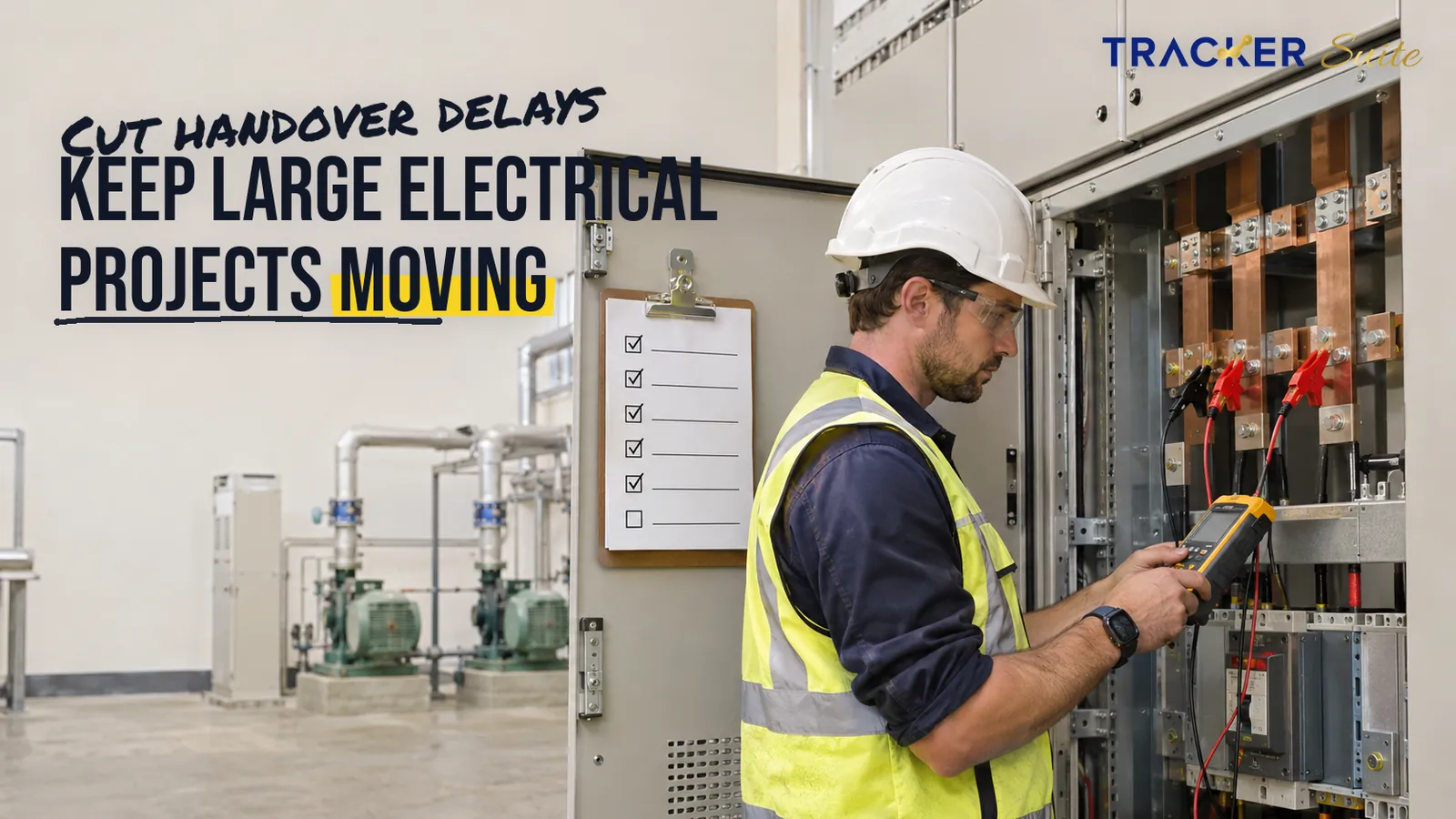
The commissioning engineer is on site with calibrated test instruments, but the main switchboard cannot be signed off. One punch-list item (a minor defect that must be closed before handover) has no owner, and the only crew able to fix it is across town. Task management software for electrical engineering firms exists to close gaps like this by giving every site task, test and handover a named owner, a due date and a visible status.
The same discipline underpins task management software for lending companies, payment businesses and investment firms, which we compare briefly later. This guide, however, follows the work an electrical firm actually performs, from installation and testing through permits, as-built drawings and planned maintenance. It also explains how connected data, automation and carefully scoped AI can support that work without displacing engineering judgement.
Key takeaways
- Much of the delay in electrical projects happens at handovers rather than during installation: between estimating, stores, site crews, testing engineers and the client.
- A task tracker shows who must act, by when, and what is blocked, a level of detail that an ERP (enterprise resource planning) system or a project schedule rarely provides for an individual site visit.
- Automation should handle reminders, recurring inspections and status reports, while design approval, test acceptance and safety decisions remain with qualified engineers.
- AI adds practical value only when it operates on clean task data and on rules your team has configured.
- A contractor running one crew may need nothing more than a shared list; the case for a connected platform strengthens with every additional crew, site, shift and maintenance contract.
At a glance
- Who this is for: electrical engineering firms and electrical contractors, including those serving construction, energy and utility clients
- Core problem: site jobs, test results and material requests scattered across calls, WhatsApp groups, spreadsheets and paper job sheets
- Workflows to fix first: commissioning checklists, inspection deadlines, field visits and recurring maintenance
- Where AI fits: highlighting overdue or at-risk work, suggesting assignments and drafting status summaries from task history
- What stays human: design approval, test acceptance, lockout/tagout decisions (isolating and locking energy sources before work begins) and certification sign-off
What is task management software for electrical engineering firms?
Task management software for electrical engineering firms is a shared system in which every installation job, test, inspection and maintenance visit becomes a trackable task with an owner, a deadline, a location and a status. It sits beside design and accounting tools, tracking the human work that moves a project from drawing to energised handover.
That emphasis on field execution separates a purpose-configured task tracker from a generic to-do list. Electrical work is field-heavy, so location matters. Much of it is also recurring and compliance-driven, so schedules matter just as much.
Most electrical tasks require evidence before the next step can begin: a signed test sheet, a photograph of a labelled distribution board or an inspector’s approval. Software that cannot hold or reference that evidence leaves supervisors reconciling paper and chat messages at the end of every week.
Why is coordination getting harder for electrical engineering firms?
Demand for electrical work keeps rising while skilled labour remains scarce, so every electrician hour and every site visit carries more weight. When a crew waits for materials or repeats a trip because instructions were unclear, the delay ripples across the project pipeline rather than staying confined to one job.
In the US, the Bureau of Labor Statistics projects that employment of electricians will grow 9 percent from 2025 to 2035, with about 72,700 openings each year on average (BLS, 2026). For a growing firm, that projection implies continuous hiring and onboarding, so process knowledge cannot live only in senior electricians’ heads.
Recruitment compounds the problem. In a 2025 survey of nearly 1,400 US construction firms by the Associated General Contractors of America and NCCER, 92 percent of firms that were hiring reported difficulty finding qualified workers (AGC and NCCER, 2025). These are US figures, but skilled-labour shortages in the electrical and construction trades are reported in many other markets too.
In 2025, 45 percent of US construction firms reported project delays caused by shortages of their own or their subcontractors’ workers (AGC and NCCER, 2025).
When labour is the constraint, wasted coordination becomes the most controllable cost. Clear task ownership will not create more electricians, but it can stop the electricians you already employ from waiting, chasing or repeating work.
Why do manual processes stop scaling as an electrical firm grows?
Manual coordination works while the owner can personally see every job. Once work spreads across several crews, sites and shifts, nobody holds the complete picture, and supervisors spend their days asking for updates instead of resolving problems.
The scaling journey usually unfolds in four stages:
- Small operation: one or two crews coordinated through phone calls, a WhatsApp group and a shared spreadsheet. The owner remembers who is where.
- Growing: several crews on different sites, a stores person and a part-time estimator. Updates arrive late, and material requests get lost in chat threads.
- Complex: commercial contracts with testing schedules, permits, client approvals and maintenance agreements. Reporting means compiling spreadsheets every Friday.
- Scaled: dozens of electricians, multiple shifts and hundreds of recurring inspections. Only connected data, automated reminders and shared dashboards keep the work visible.
Excel and WhatsApp work well at the first stage. The difficulty is that a phone call, a WhatsApp group and a shared spreadsheet can coordinate one crew. They cannot reliably coordinate twenty crews across several sites and shifts, because no single record shows what is done, what is blocked and who owns the next step.
Which electrical workflows should you track first?
Start with the workflows that repeat most often and cause the most chasing. Most electrical firms run a handful of repeatable workflows that generate tasks, evidence and handovers every week, and each one produces data that is currently scattered.
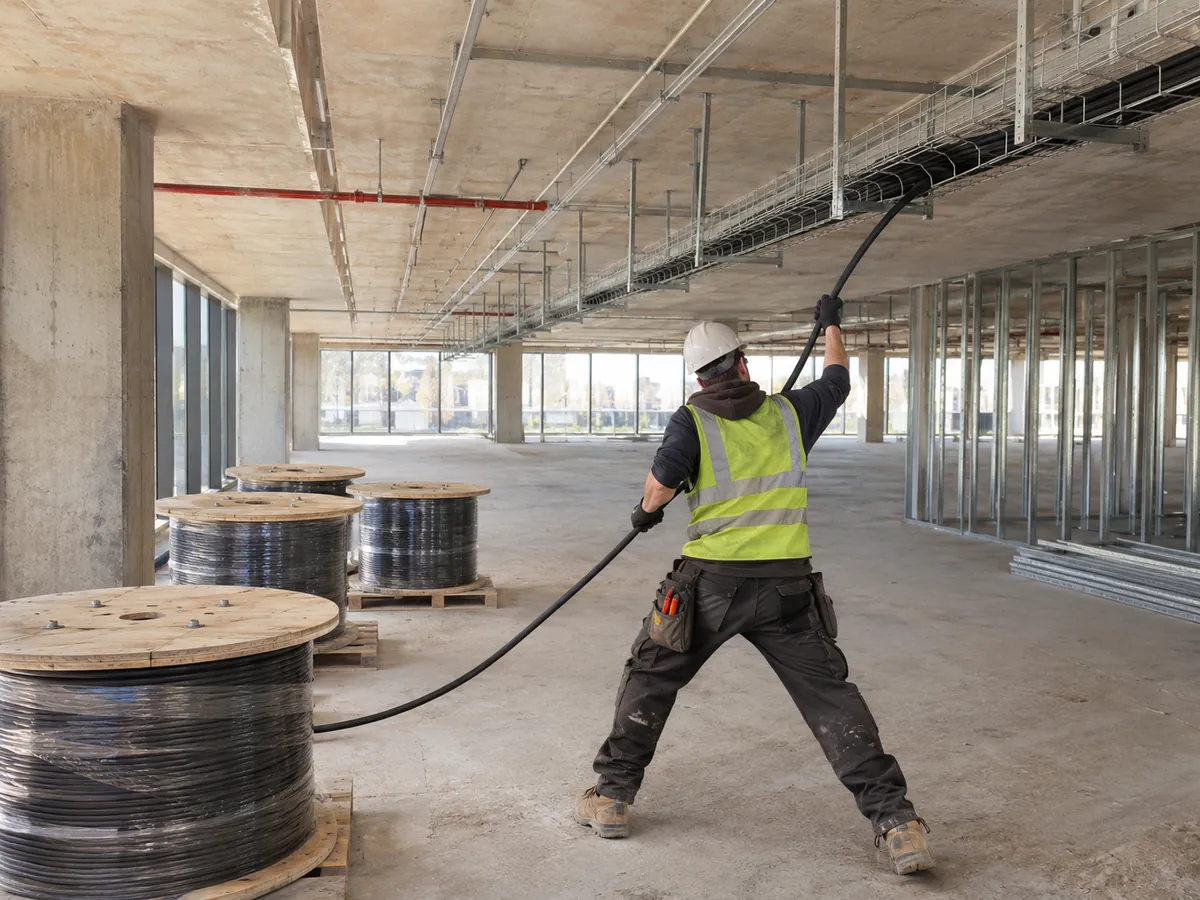
- Site installation tasks: cable pulling, containment and board installation, usually assigned by phone. Tracking captures owner, location, completion date and photographs.
- Material requisitions: crews request cable, breakers and fittings through calls or chat. A structured request shows what was asked for, approved and delivered.
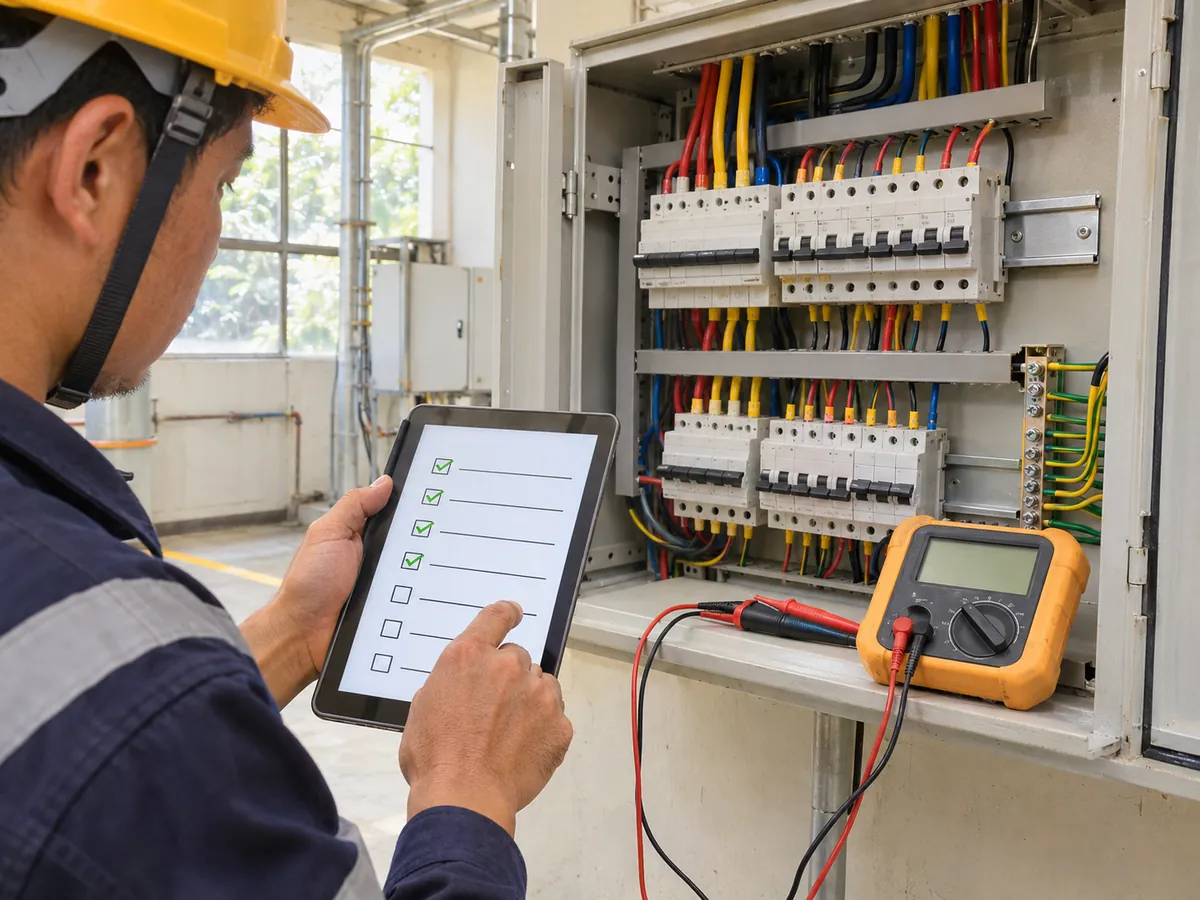
- Testing and commissioning checklists: insulation resistance, continuity and functional tests recorded on paper sheets. A checklist task makes missing tests visible before handover.
- Inspection and permit deadlines: statutory inspections and authority approvals tracked in calendars. Due-date tasks with reminders reduce last-minute rushes.
- Punch-list closure: snags noted during walkdowns and forgotten in notebooks. Each snag becomes a task with an owner and photographic proof of closure.
- As-built drawings and handover documents: redline markups (field corrections to design drawings) that must reach the drafting team. Tracking shows which packages are outstanding.
- Field service visits: breakdown calls and client callouts. A task records arrival, findings and follow-up actions.
- Recurring planned maintenance: periodic inspections, thermographic surveys (infrared checks for overheating connections) and generator tests under maintenance contracts. Recurring tasks keep each contract schedule on time.
- Tender and variation follow-up: quotations, RFQs (requests for quotation) and client approvals for changed scope, which often stall in email inboxes.
How does connected data improve operational visibility?
Connected data means each task, checklist and request is stored in one shared record instead of in separate chats and files. Managers can then see status across every site at once, and reports come from live work rather than from Friday afternoon spreadsheet compilation.
Consider the before and after. Before, a project manager calls five supervisors to learn which boards are ready for testing. After, a dashboard lists boards with installation complete, tests outstanding and snags open, filtered by site.
Permissions and accountability matter here. Electricians should see their own assignments, supervisors their sites and directors the whole portfolio. Every status change should carry a name and a timestamp, so that handover disputes can be resolved from the record rather than from memory.
Where can AI and automation help, and where must engineers stay in charge?
Automation handles predictable, repetitive steps such as reminders, recurring task creation and scheduled reports. AI can assist with prioritisation and summaries when it draws on accurate task history and configured rules. Engineering and safety decisions, however, remain with qualified people.
Useful automation in an electrical firm includes:
- Creating maintenance tasks automatically on each contract’s schedule
- Sending reminders before inspection or permit deadlines expire
- Alerting a supervisor when a commissioning checklist is overdue
- Generating a weekly status report by site
AI can use existing task data and rules to help teams identify what needs attention and when. Examples include flagging sites where open snags are accumulating, suggesting which available crew is closest to a callout or drafting a client status update for a supervisor to review.
People still define the rules and own the outcomes. Design approval, test acceptance, lockout/tagout and certification sign-off should never be delegated to software. AI is only as useful as the data beneath it, which is why disciplined task recording comes first.
What should you look for in task management software for an electrical firm?
Choose software that matches how electrical work actually happens: in the field, on recurring schedules and with evidence attached. Mobile usability, recurring tasks, checklists, permissions and reporting matter more than an extensive feature catalogue.
Use this checklist when comparing options:
- Mobile access: electricians can update tasks and attach photos from site.
- Recurring tasks: maintenance schedules generate work automatically.
- Checklists: testing and commissioning steps can be standardised.
- Location context: managers can see where field work is happening.
- Role-based permissions: each user sees the right level of detail.
- Dashboards and reports: status by site, crew and client without manual compilation.
- Simple onboarding: a new starter can follow a workflow on day one.
- Inventory link: stock and material movement are visible alongside the work.
How does the same approach work as task management software for lending companies and other firms?
The underlying problem, many hand-offs with unclear ownership, appears in financial and people businesses too. A general task platform tracks the human steps around specialist systems; it does not replace a loan origination system, payment gateway or applicant tracking system.
Here is how the same pattern looks in other sectors:
- Lending: task management software for lending companies typically tracks document collection, verification checks, underwriting queries and disbursement approvals across credit teams.
- Payments: task management software for payment companies helps teams follow merchant onboarding steps, dispute follow-ups and reconciliation exceptions.
- Venture capital: task management software for venture capital firms keeps deal-flow reviews, due diligence checklists and portfolio reporting on schedule.
- Private equity: task management software for private equity firms coordinates diligence workstreams, post-acquisition plans and portfolio company reporting.
- Recruitment and staffing: task management software for recruitment companies supports candidate follow-ups and interview scheduling, while staffing agencies track shift fills, compliance documents and timesheets.
In every case, the value comes from named owners, due dates and visible status, exactly as on an electrical site.
How does TrackerSuite fit electrical engineering workflows?
TrackerSuite is an AI-powered operations platform built to bring tasks, workflows and reporting into one workspace. For an electrical firm, the relevant capabilities map directly to the workflows above rather than to a product menu.
- Task Tracker for assigning installation work, commissioning checklists, punch-list items and recurring maintenance, with geolocation supporting visibility of field work across sites
- Dashboards and reports for status by site and crew, replacing manual weekly compilation
- Sales Tracker for following up tenders, RFQs and variation approvals
- Stack Tracker, TrackerSuite’s inventory and warehouse tool, for tracking the stock your crews draw on, with TAVI AI-powered visibility across locations and teams
TrackerSuite’s Starter plan is free for up to five users, which lets a small firm test one workflow before committing. Larger firms should confirm permissions, integration and reporting needs during a demo.
How should an electrical firm roll out task management software?
Roll out in stages, starting with one painful workflow and one site. Prove that crews will record work consistently before adding automation or AI, because every later benefit depends on reliable data.
- Pick one workflow: commissioning checklists or recurring maintenance are good starting points.
- Standardise it: agree the steps, owners, evidence and definition of done.
- Pilot on one site: run it for a few weeks with one supervisor and crew.
- Add automation: switch on reminders, recurring tasks and scheduled reports.
- Extend gradually: bring in more sites, material requests and field service.
- Introduce AI assistance: once data is consistent, use prioritisation and summaries, keeping humans in review.
What this means for you
This week, list the three workflows where your supervisors spend most time chasing updates. Choose the one with the clearest evidence requirement, such as test sheets or inspection dates, and write down its steps and owners. That single document becomes your pilot specification and your benchmark for whether any tool actually helps.
FAQs
Do small electrical contractors need task management software?
A contractor running one crew may manage well with a shared list or spreadsheet. The case for a connected platform grows as you add crews, sites, shifts or maintenance contracts, because informal coordination stops scaling.
Can task management software replace project management or ERP tools?
Usually not. ERP and project scheduling tools handle finance, procurement and programme planning, while task software tracks the daily field work that delivers them.
How does AI help electrical engineering firms without creating safety risk?
AI assists with prioritisation, reminders and summaries based on task data and configured rules. Safety-critical decisions such as test acceptance and lockout/tagout stay with qualified engineers.
What workflows should an electrical firm automate first?
Start with recurring maintenance schedules and inspection deadlines, since they repeat predictably. Commissioning checklists are a strong second choice because missing tests delay handover.
Conclusion
Electrical engineering firms rarely struggle with the technical work itself. They struggle with coordination: owners, evidence and hand-offs spread across chats, paper and spreadsheets. A connected task platform, sensible automation and carefully scoped AI can make that coordination visible as your crews and sites grow.
If you want to test this on a real workflow, explore TrackerSuite’s plans, including the free Starter plan and pilot one commissioning or maintenance process with a single crew.
Leave a Reply