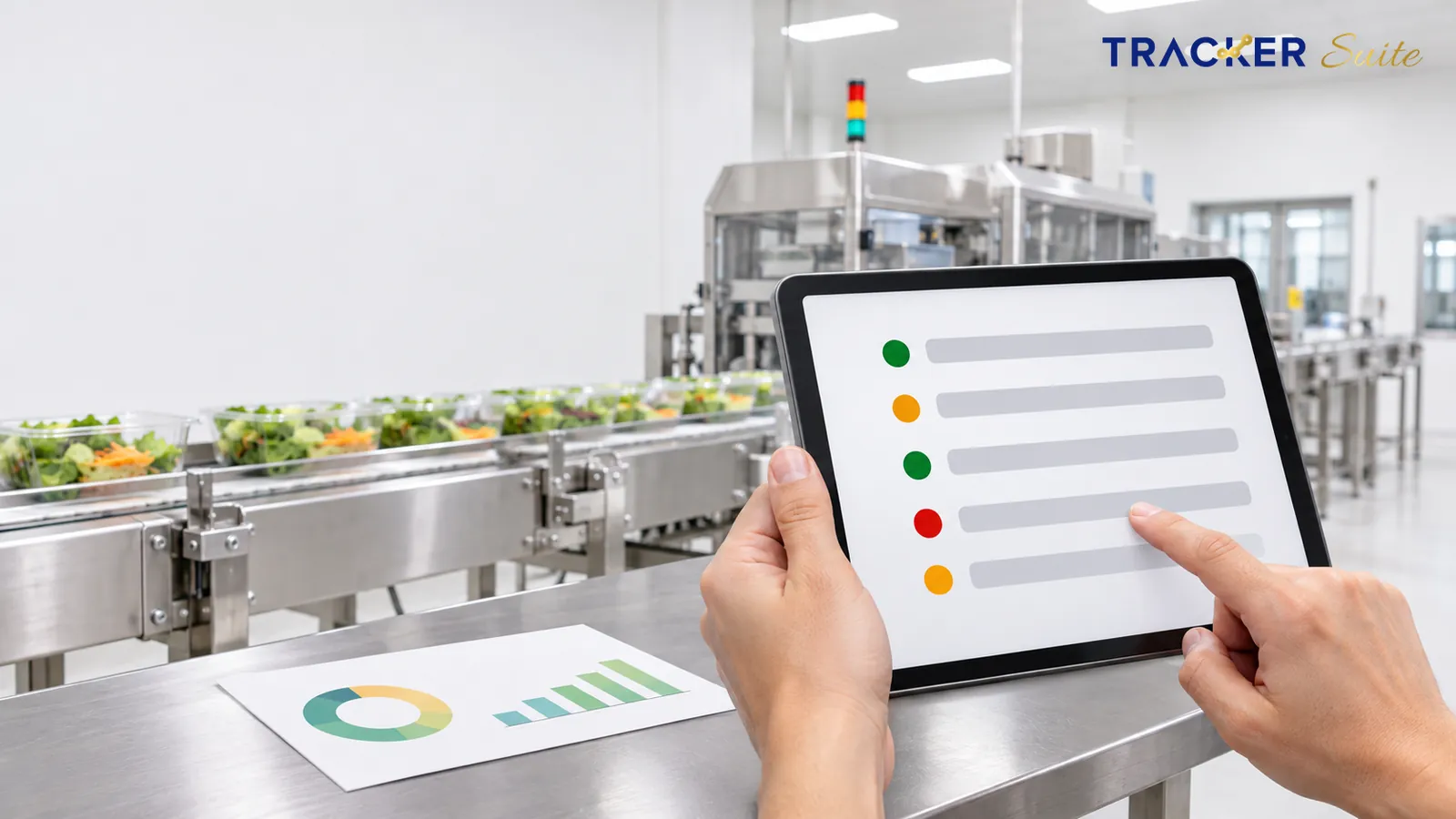
Food manufacturing is a continuous operational process. From raw material inspection and ingredient preparation to processing, packaging, quality checks, storage and dispatch, every activity requires coordination between employees and departments.
For many food manufacturing companies, production does not stop after one shift. Facilities operate across multiple shifts to meet production targets, maintain equipment utilization and fulfill customer orders.
A factory may have three shifts:
Morning shift: 6 AM to 2 PM.
Evening shift: 2 PM to 10 PM.
Night shift: 10 PM to 6 AM.
Each shift has different employees, supervisors and operational responsibilities. However, the production process continues across all three.
Consider a food processing facility manufacturing packaged snacks. During the morning shift, employees prepare ingredients and start production. The evening team continues processing and packaging, while the night shift handles cleaning, sanitation, equipment inspections and production preparation for the next day.
If the morning supervisor does not communicate an unfinished maintenance task to the evening team, the equipment issue may remain unresolved. Similarly, if the night shift does not complete a sanitation checklist or record an inspection, the next shift may not have clear information about the facility’s readiness.
These communication gaps can affect production schedules, quality processes and employee accountability.
According to the US Bureau of Labor Statistics, shift work is common among food processing equipment workers because manufacturing schedules often include early mornings, evenings and nights. The agency projects employment of food processing equipment workers to grow by 5% between 2025 and 2035. <a href=”https://www.bls.gov/ooh/production/food-and-tobacco-processing-workers.htm“>Source: US Bureau of Labor Statistics.</a>
Food manufacturers therefore need reliable systems to coordinate employees, tasks and operational activities across shifts.
This is where task management software for food manufacturing across shifts becomes important. It helps manufacturers assign work, track completion, manage shift handovers and maintain visibility into factory operations without depending entirely on spreadsheets, paper registers and manual communication.
What Is Task Management Software for Food Manufacturing Across Shifts?
Task management software is a digital platform that helps food manufacturers create, assign, monitor and manage operational activities across different shifts.
Instead of depending on separate registers, WhatsApp messages, spreadsheets and verbal instructions, managers can use a centralized platform to coordinate work between production teams.
For example, a food manufacturing facility can create tasks for:
Raw material inspection.
Ingredient preparation.
Production line setup.
Equipment inspection.
Processing and packaging activities.
Cleaning and sanitation.
Quality inspection.
Temperature and storage checks.
Inventory verification.
Maintenance activities.
Finished goods inspection.
Dispatch preparation.
Each task can include an assigned employee, department, shift, deadline, instructions, priority and completion status.
When one shift ends, the supervisor can review completed and pending tasks. The incoming shift can access the relevant updates and understand which activities require attention.
This creates a more structured approach to managing factory operations.
The main objective is to ensure that responsibilities do not get lost when employees change shifts.
Why Do Food Manufacturers Need Task Management Software Across Shifts?
Managing one production team is different from managing multiple teams working at different times.
When employees change shifts, information must move with them. If tasks are not properly documented, the incoming team may have to repeat work, investigate unresolved issues or contact the previous supervisor.
Here are some common challenges food manufacturers face.
1. Incomplete Shift Handovers
Shift handovers are among the most important activities in food manufacturing.
When one team finishes its shift, it must communicate important operational information to the next team.
This may include:
Production targets achieved.
Pending production activities.
Equipment issues.
Raw material shortages.
Quality inspection status.
Cleaning and sanitation completion.
Maintenance requirements.
Outstanding approvals.
When these updates are shared through verbal instructions or informal messages, important details can be missed.
For example, the morning shift may identify an issue with a packaging machine. If the maintenance requirement is not properly communicated to the evening supervisor, the problem may remain unresolved.
Task management software provides a centralized record of completed, pending and overdue activities.
Supervisors can review outstanding tasks before handing over responsibilities.
The incoming shift can see what has been completed, what remains pending and who is responsible for the next action.
This reduces dependence on individual employees remembering and communicating every operational detail.
2. Managing Production Activities Across Multiple Shifts
Food manufacturing facilities may operate several production lines simultaneously.
A company manufacturing packaged foods may have separate lines for:
Raw material preparation.
Mixing and processing.
Cooking or baking.
Cooling.
Packaging.
Labelling.
Carton preparation.
Each production line has its own activities and assigned employees.
When production continues across shifts, managers need to understand whether the previous team completed its responsibilities before the next team starts.
Task management software helps supervisors assign shift-specific responsibilities and track progress.
For example, the morning shift can complete raw material preparation and equipment readiness checks. The evening shift can manage production and packaging activities, while the night shift can handle scheduled cleaning and maintenance tasks.
Managers can monitor each activity through a centralized dashboard.
This improves coordination between shifts and helps identify delays before they affect the production schedule.
3. Maintaining Cleaning and Sanitation Schedules
Cleaning and sanitation are critical activities in food manufacturing.
Production equipment, processing areas, storage sections and packaging lines require cleaning according to approved procedures and schedules.
Some facilities perform cleaning during planned production breaks or dedicated sanitation shifts.
The US Occupational Safety and Health Administration highlights that food processing facilities often maintain separate shifts for cleaning and sanitizing production equipment and other areas of the facility. Its guidance also discusses the safety risks associated with equipment cleaning and hazardous energy isolation. <a href=”https://www.osha.gov/sites/default/files/enforcement/directives/cpl-04-05-2306.pdf“>Source: OSHA – Food Manufacturing Industry Regional Emphasis Program.</a>
Managing these activities across different shifts can be difficult without clear task ownership.
Task management software helps manufacturers:
Schedule recurring cleaning activities.
Assign sanitation responsibilities.
Provide digital checklists.
Set completion deadlines.
Collect supporting photographs.
Route completed tasks for supervisor approval.
Escalate incomplete activities.
For example, the night shift sanitation supervisor can receive a scheduled task to verify the cleaning of a production line.
Once employees complete the activity, they can submit the required checklist and supporting evidence for review.
The next shift can then see the recorded status rather than relying only on verbal confirmation.
Important: Digital task records support sanitation management but do not replace validated cleaning procedures, environmental monitoring, microbiological testing or food safety verification.
4. Tracking Quality Control Activities During Every Shift
Food quality checks must be performed at different stages of manufacturing.
These activities may include:
Incoming raw material inspection.
Ingredient verification.
Processing checks.
Product weight verification.
Packaging inspection.
Labelling checks.
Finished product inspection.
Storage condition monitoring.
When different employees perform these activities across shifts, managers need a consistent way to record their completion.
Task management software allows quality supervisors to assign inspection activities, provide instructions and track the status of each assignment.
For example, the morning quality team may complete incoming material inspections, while the evening team handles packaging verification.
The night shift may be responsible for checking storage conditions and reviewing pending inspection records.
Managers can monitor the activities and route completed submissions for approval.
This improves visibility into inspection responsibilities across shifts.
5. Managing Equipment Maintenance Across Shifts
Food manufacturing facilities use several types of equipment, including mixers, conveyors, ovens, freezers, filling machines, cutting machines and packaging systems.
Equipment problems can affect production schedules and create additional work for maintenance teams.
The challenge is not limited to identifying a problem. The maintenance requirement must also be communicated to the next shift.
For example, if an employee notices unusual noise in a conveyor system during the evening shift, the issue must be recorded and assigned to the maintenance team.
If the information is not documented, the next team may continue operating without knowing about the pending maintenance requirement.
Task management software helps employees report issues and assign maintenance activities.
Managers can create recurring inspection tasks, assign technicians and track the status of repair work.
Completed maintenance activities can be submitted for review before the equipment is returned to service under the facility’s approved procedures.
6. Managing Employee Attendance and Shift Responsibilities
Food manufacturing companies employ production operators, machine technicians, quality inspectors, sanitation workers, packaging employees and warehouse staff.
Managers need visibility into employee attendance, assigned responsibilities and working hours.
Manual attendance registers may provide basic attendance information but do not necessarily show whether employees have completed their assigned tasks.
Task management software with workforce management capabilities can help businesses:
Monitor employee attendance.
Assign shift-specific tasks.
Track working hours through timesheets.
Manage leave and approvals.
Record task completion.
Monitor employee workloads.
Review department-wise performance.
Geo-fenced attendance can also help businesses maintain location-based attendance records for authorized employees.
This helps supervisors understand workforce availability and manage assignments more effectively.
7. Reducing Communication Gaps Between Supervisors
A food manufacturing facility may have separate supervisors for production, quality, maintenance, sanitation and packaging.
These managers need to coordinate with each other throughout the day.
For example, the production supervisor may be waiting for equipment clearance from maintenance, while the packaging team is waiting for product inspection approval from quality.
Without a centralized system, managers may spend considerable time making calls and sending follow-up messages.
Task management software helps organize these activities through assigned responsibilities, notifications, task updates and approval workflows.
Employees can view their assignments, while managers can track the status of work across departments.
This creates a more transparent communication process between supervisors.
How Task Management Software Supports Different Food Manufacturing Workflows Across Shifts
Different food manufacturing businesses have different production requirements. However, all need clear task ownership and communication between employees working at different times.
1. Bakery and Confectionery Manufacturing
Bakeries and confectionery manufacturers manage activities such as ingredient preparation, mixing, baking, cooling, decoration and packaging.
A company producing packaged biscuits may need to coordinate:
Ingredient availability checks.
Mixing equipment preparation.
Oven inspection.
Baking schedule.
Product weight verification.
Cooling line monitoring.
Packaging inspection.
Finished goods verification.
Task management software can help assign these activities to employees across shifts.
For example, the morning shift can prepare ingredients, the evening team can handle baking and packaging, and the night team can complete scheduled sanitation and maintenance activities.
2. Dairy and Milk Processing
Dairy manufacturers handle milk reception, quality checks, pasteurization, processing, filling, packaging and cold storage.
These activities require coordination across production and quality teams.
Task management software can help schedule equipment inspections, cleaning activities, quality-related assignments and shift handovers.
For example, the outgoing shift can record pending equipment checks and unfinished documentation for the incoming supervisor.
Temperature monitoring and pasteurization validation should continue through approved technical systems and procedures.
3. Meat and Poultry Processing
Meat and poultry processing facilities manage several stages involving receiving, processing, cutting, packaging, cold storage and dispatch.
Managers need to coordinate sanitation, equipment maintenance, employee responsibilities and inspection activities.
Task management software helps assign responsibilities, track cleaning schedules and monitor completion of operational checklists.
It can also help supervisors maintain visibility into pending activities between shifts.
4. Packaged Food and Snacks Manufacturing
Packaged food manufacturers may operate several production lines for chips, biscuits, instant foods, frozen products and ready-to-eat meals.
Production teams need to coordinate ingredient preparation, processing, packaging and finished goods handling.
Task management software helps managers assign production-related tasks, schedule equipment inspections and track packaging verification.
Recurring workflows also help teams manage daily operational activities across shifts.
5. Frozen and Processed Food Manufacturing
Frozen food manufacturers need to coordinate processing, freezing, packaging, storage and dispatch activities.
Tasks may include equipment checks, cleaning schedules, warehouse inspections and documentation reviews.
A centralized task management system can help assign these activities to employees and track completion across shifts.
Cold-chain temperature monitoring and product safety controls must remain within suitable specialist systems.
Important Features to Look for in Task Management Software for Food Manufacturing Across Shifts
A basic task management application may not be sufficient for a factory operating around the clock.
Food manufacturers should look for features that support shift-based operations and workforce coordination.
1. Shift-Wise Task Assignment
Managers should be able to create tasks and assign them to specific employees, departments or shifts.
Each assignment should include:
Task instructions.
Responsible employee.
Shift or time window.
Completion deadline.
Priority.
Supporting documents.
Approval requirements.
This makes responsibilities clearer for employees working at different times.
2. Digital Shift Handover Management
This is one of the most important capabilities for multi-shift manufacturing facilities.
Supervisors should be able to record:
Completed tasks.
Pending activities.
Equipment issues.
Maintenance requirements.
Inspection status.
Production-related updates.
Outstanding approvals.
The incoming shift should be able to review these updates before starting its responsibilities.
A structured handover reduces dependence on informal communication.
3. Recurring Tasks and Workflow Automation
Many food manufacturing activities happen daily, weekly or according to production schedules.
These include equipment inspections, cleaning, sanitation, stock checks and routine quality activities.
Recurring task management helps supervisors schedule these activities in advance.
Automated reminders notify employees about upcoming responsibilities.
4. Digital SOP Management
Food manufacturing employees must follow approved Standard Operating Procedures.
SOPs may cover:
Equipment operation.
Cleaning and sanitation.
Ingredient handling.
Packaging procedures.
Quality inspections.
Warehouse activities.
Safety practices.
Digital SOP automation helps make instructions accessible to employees and supports consistency across different shifts.
5. Mobile Workforce Management
Production employees and supervisors may not have access to desktop computers throughout their shifts.
Mobile task management allows employees to access instructions, update task status, submit evidence and receive notifications from their mobile devices.
This is especially useful for employees working across large production facilities.
6. Digital Proof of Work
Managers need to verify whether assigned tasks have been completed.
Employees should be able to submit:
Photographs.
Videos.
Inspection documents.
Completed checklists.
Supporting reports.
For example, a sanitation employee can submit photographs after completing a cleaning assignment.
The supervisor can review the submission and approve or reject it.
7. AI-Powered Work Validation
AI-based work validation can help supervisors review submitted photographs, videos and documents against predefined task criteria.
For example, an employee may be required to submit evidence of a completed packaging area inspection.
The system can review the submitted evidence against the specified requirements and flag missing or potentially non-compliant submissions for human review.
This can reduce repetitive manual checking.
AI validation should not be treated as a replacement for microbiological testing, food safety inspection or technical approval.
8. Automated Reminders and Escalations
When employees work across different shifts, managers cannot always follow up personally.
Automated reminders can notify employees about pending assignments and upcoming deadlines.
Escalation workflows can alert supervisors when important activities remain incomplete.
This helps prevent tasks from being overlooked during shift changes.
9. Attendance and Timesheet Management
Manufacturers should be able to monitor employee attendance and working hours across shifts.
Timesheets help managers review task duration and workforce utilization.
Combined with task assignments, this gives better visibility into employee responsibilities and workload distribution.
10. Shift-Wise Dashboards and Analytics
Managers need to understand what is happening across all shifts without contacting every supervisor.
Dashboards should provide visibility into:
Tasks completed by each shift.
Pending assignments.
Overdue activities.
Employee attendance.
Maintenance completion.
Inspection status.
Approval delays.
Department-wise performance.
This helps management identify operational bottlenecks and take corrective action.
Task Management Software vs ERP vs MES vs QMS
Food manufacturing companies use several software systems to manage factory operations.
However, each system serves a different purpose.
| Software type | Primary purpose | Food manufacturing example |
|---|---|---|
| Task Management Software | Assigning and tracking daily responsibilities | Managing shift handovers, cleaning tasks and equipment inspections |
| ERP Software | Managing business resources and transactions | Procurement, finance, inventory and production orders |
| Manufacturing Execution System (MES) | Monitoring manufacturing execution | Production tracking, machine performance and process monitoring |
| Quality Management System (QMS) | Managing quality processes | Non-conformance reports, corrective actions and quality documentation |
| Warehouse Management System (WMS) | Managing warehouse activities | Stock locations, picking, packing and dispatch |
These systems should not be viewed as direct replacements for one another.
For example, an MES may monitor production line performance, while ERP manages inventory and procurement.
A QMS handles specialist quality processes, while task management software helps assign responsibilities and track the completion of operational activities.
A manufacturer can use these systems together through suitable integrations.
How TrackerSuite.ai Helps Food Manufacturers Manage Operations Across Shifts
Food manufacturers need a centralized way to coordinate employees, manage recurring activities and maintain visibility across different shifts.
TrackerSuite.ai is an AI-powered business operations platform that brings task management, workflow automation, digital SOPs, workforce management and operational analytics together.
Its Task Tracker can help food manufacturers organize daily responsibilities and improve coordination between production teams.
1. Centralized Task and Workforce Management
Managers can create tasks, assign employees, set deadlines and monitor progress through a centralized platform.
For example, a production manager can assign equipment inspection tasks to the morning shift, packaging verification to the evening shift and scheduled sanitation activities to the night shift.
Employees can receive notifications and update their task status.
Managers can monitor completed and pending work without depending entirely on phone calls or spreadsheets.
2. Digital SOP Automation
Food manufacturing facilities follow standard procedures for equipment operation, cleaning, sanitation, inspections and production activities.
TrackerSuite.ai’s digital SOP capabilities help businesses organize instructions and connect them with operational workflows.
Employees can access the relevant instructions while completing assigned activities.
This supports consistency and accountability across different teams and shifts.
3. Mobile Workforce Management
Production employees, maintenance technicians and warehouse teams can access assigned tasks and submit updates through mobile devices.
TrackerSuite.ai also supports workforce management features such as attendance tracking, timesheets and task monitoring.
This helps managers maintain visibility into employee activities across different locations and shifts.
4. AI Work Validation
TrackerSuite.ai’s AI Work Validation feature helps managers review photographs, videos and documents submitted by employees against predefined requirements.
For example, after completing a sanitation or equipment inspection task, an employee can submit supporting photographs.
The AI validation process can help identify whether the evidence meets the specified criteria and flag exceptions for further review.
This makes work verification more structured and reduces repetitive manual checking.
5. Automated Reminders and Approval Workflows
Managers can configure automated notifications, reminders and approval workflows.
For example, when the evening shift completes an equipment inspection, the submission can be routed to the maintenance supervisor for review.
If the task requires additional work, it can be reassigned with updated instructions.
This creates a clearer process for managing pending responsibilities across shifts.
6. Performance Dashboards and Analytics
TrackerSuite.ai provides dashboards that help managers review completed tasks, overdue assignments, employee performance and pending activities.
Management can identify which departments are experiencing delays and where additional workforce support may be required.
This supports better operational planning and decision-making.
By bringing task tracking, digital SOPs, workforce management and AI-powered work validation together, TrackerSuite.ai helps food manufacturers improve accountability and gain better control over daily operations.
Explore TrackerSuite.ai to understand how centralized task management and workflow automation can support your manufacturing teams.
Practical Example: Managing Three Production Shifts in a Food Manufacturing Factory
Consider a packaged food manufacturing company operating three shifts across two production lines.
The factory employs:
One factory manager.
Three shift supervisors.
Six production operators.
Two maintenance technicians.
Two quality inspectors.
Four sanitation employees.
Four packaging and warehouse employees.
The facility manufactures packaged snacks and needs to manage production preparation, equipment inspections, quality checks, packaging and sanitation.
Without centralized task management, supervisors may use paper registers, phone calls and spreadsheets to communicate updates.
With task management software, the process can be organized as follows:
| Shift | Activities | Expected output |
|---|---|---|
| Morning (6 AM–2 PM) | Raw material verification, equipment readiness, production preparation | Production readiness and completed checks |
| Evening (2 PM–10 PM) | Production monitoring, packaging, quality inspections | Production updates and inspection records |
| Night (10 PM–6 AM) | Cleaning, sanitation, maintenance inspections and next-shift preparation | Completed sanitation records and handover updates |
At the end of the morning shift, the supervisor can record pending production activities and equipment observations.
The evening supervisor can review those updates before taking responsibility.
If a maintenance issue is reported, the task can be assigned to a technician with a clear deadline.
At the end of the evening shift, the team can update packaging status and pending quality approvals.
The night shift can then review the outstanding activities and manage its assigned sanitation and maintenance tasks.
The factory manager can monitor all three shifts through a centralized dashboard.
This approach creates a structured handover process, improves task visibility and reduces the need for repeated manual follow-ups.
How to Choose the Right Task Management Software for Food Manufacturing
Before selecting a platform, manufacturers should evaluate their current shift management processes and operational requirements.
Consider these factors:
1. Shift-based task assignment: Can managers assign tasks to specific shifts, employees and departments?
2. Shift handover visibility: Can outgoing supervisors record pending activities for incoming teams?
3. Digital SOP management: Can employees access approved instructions and checklists?
4. Mobile accessibility: Can production and maintenance employees update assignments through mobile devices?
5. Automated reminders: Can the platform send notifications for pending and overdue tasks?
6. Proof of work: Can employees upload photographs, videos and documents against assignments?
7. Workforce management: Does it support attendance, timesheets and employee performance tracking?
8. Reporting: Can management compare task completion and pending work across different shifts?
9. Scalability: Can the platform support additional production lines, facilities and employees?
10. Integration: Can it work alongside existing ERP, MES, QMS and warehouse management systems?
A free trial is a practical way to evaluate the software. Start with one production line and test an actual shift handover, equipment inspection or sanitation workflow before implementing it across the facility.
Conclusion
Food manufacturing companies operate in an environment where production activities continue across different shifts, and every team depends on the work completed by the previous one.
When responsibilities are communicated through paper registers, spreadsheets and informal messages, important tasks can be delayed or overlooked.
Task management software provides a centralized way to assign responsibilities, track production-related activities, manage shift handovers and monitor employee performance.
It also helps businesses organize recurring inspections, sanitation activities, maintenance assignments and approval workflows.
While ERP, MES and QMS platforms manage specialist manufacturing and quality processes, task management software connects employees and daily operational responsibilities.
With centralized task tracking, digital SOP automation, mobile workforce management, automated reminders and AI-powered work validation, TrackerSuite.ai can help food manufacturers improve shift coordination, reduce manual follow-ups and gain better visibility into factory operations.
Ready to improve coordination across your production shifts?
Explore TrackerSuite.ai and see how AI-powered task management and workflow automation can help your manufacturing business save time, improve accountability and manage daily operations more effectively.
Frequently Asked Questions
1. What is the best task management software for food manufacturing across shifts?
The best software should support shift-wise task assignment, digital handovers, recurring workflows, mobile access, automated reminders, employee attendance, proof of work and performance dashboards.
TrackerSuite.ai is an option for manufacturers looking to manage workforce activities and operational tasks through a centralized platform.
2. How does task management software improve shift handovers?
It allows outgoing supervisors to record completed tasks, pending activities, equipment issues and inspection updates. Incoming supervisors can review this information before starting their shift, reducing dependence on verbal communication.
3. Can task management software manage morning, evening and night shifts?
Yes. Managers can organize activities by shift, department and employee. They can assign responsibilities, set deadlines and monitor task completion across different teams.
4. How can food manufacturers track cleaning and sanitation activities?
Manufacturers can create recurring sanitation tasks, assign responsibilities, provide digital checklists and collect supporting evidence. Supervisors can review completion records and manage pending activities.
5. Can task management software help with food safety compliance?
It can help coordinate inspections, sanitation activities, documentation and corrective action assignments. However, it does not replace HACCP-based food safety management, laboratory testing, regulatory compliance systems or technical verification.
6. Can managers compare employee performance across shifts?
Yes. Performance dashboards can help managers review completed tasks, pending assignments, overdue activities and employee workloads by shift or department.
7. Does task management software replace MES or ERP in food manufacturing?
No. ERP systems manage business resources and transactions, while MES platforms monitor manufacturing execution. Task management software focuses on assigning and tracking daily responsibilities. These systems can work together through integrations.
8. Can employees submit photographs as proof of completed work?
Yes. Mobile-enabled task management platforms can allow employees to submit photographs, videos and documents against assigned activities. Supervisors can review the evidence and approve or reject submissions.
Leave a Reply