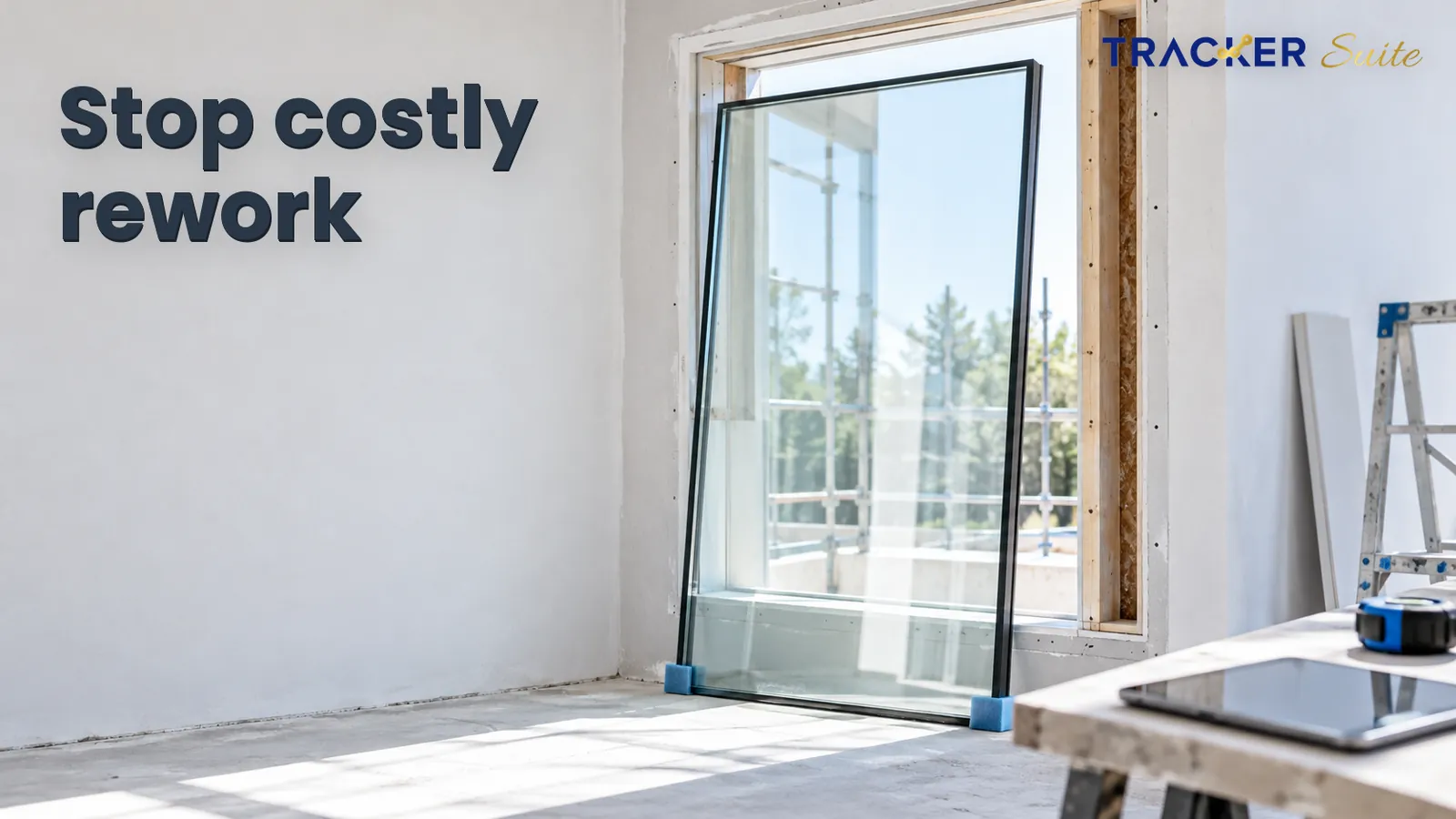
A custom glass panel cut from an outdated measurement can turn a profitable job into an expensive remake. So can a window unit ordered before anyone verified the rough opening, or a fence crew dispatched before the post layout was approved. Task management software for window contractors, glaziers and fencing installers matters because these failures rarely come from poor workmanship. They come from information lost between the site, the office, the fabricator and the crew.
For most specialty contractors, the biggest opportunity is to connect site measurements, supervisor approvals, fabrication, dispatch and installation in one traceable workflow. That change helps close the communication gaps that lead to expensive rework.
Key takeaways
- Rework is especially costly in these trades, because custom glass, window units and cut fence materials usually cannot be resized or returned once fabricated.
- Much of the rework begins at a handoff: measurements sent by text, fabrication released by email, deliveries tracked in a spreadsheet and crews booked by phone.
- Approved shop drawings, material delivery stages and crew schedules jointly determine whether a job is genuinely ready for installation.
- AI adds practical value only after workflows and data are connected. At that point, it can help flag overdue steps and reduce routine follow-up.
- Start with one job type, prove the workflow, then extend it across crews, branches and suppliers.
What is changing for window, glass and fencing contractors?
Window, glass and fencing contractors are handling more custom, higher-specification products with tighter installation windows and thinner crews. Energy-performance expectations, larger glazing formats, shifting fabrication lead times and persistent shortages of experienced installers all reduce the margin for error. As a result, a single mismatched dimension now carries a larger financial and scheduling cost.
On the window side, energy codes and customer expectations keep pushing demand toward high-performance products. These include double- and triple-glazed insulated glass units, low-emissivity (low-E) coatings that reduce heat transfer, and thermally broken frames. Such products are usually made to order, so replacement lead times are longer and mistakes are harder to absorb.
Commercial glazing increasingly involves larger panels, structural glazing and curtain wall systems, which are non-load-bearing glass facades hung from the building frame. Heavier units demand closer coordination of lifting equipment, site access and installation sequencing.
Fencing contractors face their own pressures. More projects involve aluminium, composite or custom gate systems, while permit rules and utility locates (the marking of buried services before digging) add steps before any post goes in. Across all three trades, recruiting experienced installers remains a widely reported difficulty, so newer crew members depend on clear, written instructions rather than accumulated know-how.
Why do window, glass and fencing jobs create so much rework?
Window, glass and fencing jobs create rework because each step depends on an exact dimension or layout recorded earlier by someone else. When measurements, approvals, orders and crew schedules live in separate tools, one change fails to reach everyone. The error then surfaces on site, where correction is most expensive.
For window contractors, the riskiest point is the measure-to-order handoff. The rough opening, meaning the framed gap in the wall that the unit must fit, has to be recorded precisely. A rounded figure, an unclear photo or a dimension entered against the wrong line item can produce a custom unit that does not fit.
Glass contractors have even less tolerance. Tempered (toughened) glass is heat-treated for strength, is made to final size and cannot be cut afterwards. Toughened laminated glass and sealed insulated glass units behave the same way, so a wrong dimension usually means a full reorder and another fabrication cycle.
Fencing contractors face a layout problem rather than a fabrication one. Post spacing, gate swing, slope, underground utilities and panel counts must align before concrete is poured. Once footings are set in the wrong place, correcting them means excavating and starting again.
Industry research supports the view that information flow, not craftsmanship, drives much construction rework. In a survey of 599 US construction leaders, FMI and PlanGrid found that miscommunication and poor project data caused 48% of rework: 26% from poor communication among team members and 22% from poor project information (FMI and PlanGrid, 2018). For a specialty contractor, that finding is encouraging, because the way information moves is something a business can redesign.
If construction productivity caught up with the total economy, the sector could add an estimated $1.6 trillion in value (McKinsey Global Institute, 2017).
McKinsey linked that gap to factors including weak project management and limited investment in digital tools, both of which apply directly to trades that live on precise handoffs.
Where does the measure-to-installation workflow break down?
The measure-to-installation workflow breaks down at the handoffs between people rather than inside individual tasks. A measurer surveys, an estimator prices, a supervisor approves, a fabricator builds and a crew installs. Each handoff depends on the latest version of the job record, and without one shared record, errors travel downstream unnoticed.
A typical specialty contractor runs these workflows, each generating data that often ends up scattered:
- Site survey and measurement: dimensions, photos and site notes, frequently captured on paper or a phone and retyped later.
- Quote revision: pricing changes whenever measurements or specifications change, leaving several versions in email threads.
- Supervisor approval: verification of measurements and shop drawings (fabrication drawings showing exact dimensions, materials and fixings), often given verbally.
- Fabrication release and ordering: the order sent to a factory or supplier, with confirmation rarely linked back to the job.
- Fabrication lead time tracking: expected ready dates that move, tracked in spreadsheets or from memory.
- Delivery and site readiness: delivery staging, site access and confirmation that preceding trades have finished.
- Crew dispatch and installation: assigning installers, equipment and travel, usually by phone or WhatsApp.
- Inspection, snagging and warranty: the punch list (defects to fix before handover), photos, customer sign-off and warranty records.
The most expensive mistakes tend to happen in the early steps, from site survey through fabrication release, because errors there are built into custom products. A missed delivery or a double-booked crew costs time, whereas an early dimensional error costs both time and materials.
Why are shop drawings, deliveries and crew schedules the real readiness test?
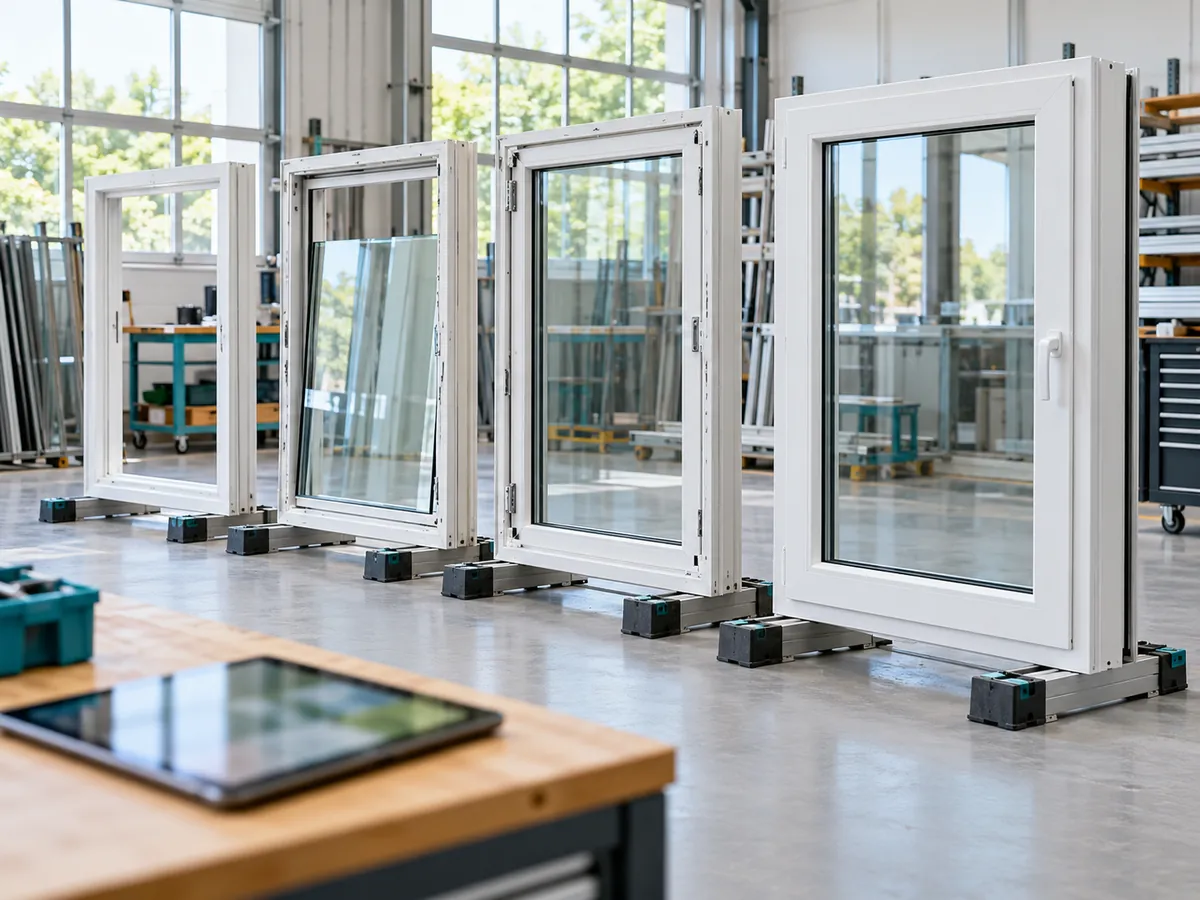
Approved shop drawings, material delivery stages and crew schedules together determine whether a job can actually be installed. A contractor may have skilled technicians and sufficient materials. Yet if approved drawings are unavailable, materials arrive late or the crew is scheduled too early, the entire project can be delayed.
A common pattern looks like this:
- The crew arrives and the glass is on site, but the drawings were revised after the last approval, so the installer works from an outdated version.
- Fence materials are delivered and the crew is booked, but gate hardware is delayed, forcing a second site visit.
- Windows are ready at the factory, but the crew has been assigned elsewhere because nobody updated the ready date.
Treating readiness as three linked conditions, rather than three separate conversations, lets a scheduler distinguish jobs that are installable this week from jobs that are merely booked. That distinction is where consistent fabrication lead time tracking pays off.
Why do manual processes stop working as the business grows?
Manual processes work while the owner can personally hold every job in memory. As a contractor adds crews, branches, shifts and supplier relationships, the number of handoffs grows faster than any individual can track. Managers then spend their days chasing updates instead of managing the work.
The scaling journey usually unfolds in recognisable stages:
- Small operation: one or two crews, with the owner measuring and scheduling. WhatsApp, Excel and phone calls are perfectly workable.
- Growing operation: several crews, a dedicated estimator and perhaps a second branch. Record versions diverge and follow-up lacks a clear owner.
- Complex operation: commercial contracts, formal approvals, supplier portals and compliance documentation. Reporting requires hours of manual compilation.
- Scaled operation: connected job records, automated reminders and dashboards, with AI assisting prioritisation.
Excel works well for simple tracking, but businesses with multiple teams, locations or workflows eventually need a more connected operational system. The difference is visible in daily routines. Instead of phoning each crew lead for progress, an operations manager reads a central status view. Instead of an estimator remembering which quotes need chasing, a structured follow-up workflow surfaces them automatically.
How can automation and AI help without removing human control?
Automation handles repetitive steps such as reminders, status changes and routine reports. AI uses connected job data and configured rules to help teams identify what needs attention and when. People still define the rules, approve measurements and release fabrication, so accountability for costly decisions stays with experienced staff.
Practical automation for these trades includes:
- Blocking fabrication release until a supervisor approval task is completed.
- Sending reminders before a delivery date or when an approval becomes overdue.
- Creating recurring tasks for maintenance contracts and warranty inspections.
- Delivering daily summary reports to managers without manual compilation.
AI is only useful when it is connected to business data and workflows. With structured records, AI can help flag jobs whose readiness conditions are incomplete, suggest which overdue tasks deserve attention first, or support checks on completed work. Without structured data, it has nothing reliable to work from. Supervisors remain responsible for approving dimensions, accepting drawings and signing off installations.
What should task management software for window contractors include?
Software for this trade should link every job to its measurements, approvals, fabrication status, delivery stage and crew assignment. It should work on mobile devices in the field, support role-based permissions and produce reports without manual effort. Glass and fencing businesses need the same foundation, adapted to their own workflows.
The core decision criteria are:
- Job records that hold photos, measurements and drawing versions together.
- Approval steps that gate fabrication release.
- Fabrication and delivery stages visible to schedulers.
- Mobile updates and location verification for field crews.
- Recurring task templates for repeat job types.
- Role-based permissions that define who can edit, approve and view.
- Automated reminders, dashboards and integration with existing tools.
Trade differences matter. Task management software for glass contractors should capture glass type, toughening status and coating details, because these determine whether a unit can be altered. Task management software for fencing contractors should record post layouts, utility locate confirmations and gate specifications before anyone digs. Sound construction task management also requires field crew scheduling software that shows crew availability against confirmed readiness, not just open calendar slots.
A simple tool is enough for a one-crew installer handling a modest number of jobs, mostly in stock sizes. A shared task list and calendar may serve that business well. A connected system becomes necessary once you run several crews, depend on custom fabrication and supplier lead times, or find managers chasing updates all day.
How does TrackerSuite fit a window, glass or fencing operation?
TrackerSuite is an AI-powered operations platform that connects tasks, field activity, inventory and reporting. For specialty contractors, it can act as a contractor operations platform in which every workflow step has an owner, a due date and a status visible to both the office and the field.
Here is how TrackerSuite maps to the workflow above. Task Tracker assigns measurement, approval and installation steps to named owners, with attachments, recurring tasks, industry task templates and calendar views by team member. Geolocation tracking and geofencing, a virtual boundary around a job site that records crew check-ins, help managers confirm attendance across sites.
For materials, Stack Tracker records stock by location, tracks orders through their lifecycle and keeps a stock movement history. That suits contractors holding glass, frames, hardware or fence panels across several yards. Email reminders before tasks fall due, WhatsApp notifications and daily automated reports reduce manual chasing.
TAVI, TrackerSuite’s built-in AI assistant, supports AI-based predictive tasking and AI work validation using the task data your team already records. Your supervisors still make the final call on measurements, drawings and sign-off.
At a glance
- Task Tracker: task ownership, due dates, recurring tasks, templates and calendar views.
- Growth Plan: TAVI AI assistant, WhatsApp reminders, performance reports and geolocation tracking, with workflow and real-time geofencing available as add-ons; free trial available.
- Scale Plan: advanced task and workflow management, unlimited geofence sites for attendance and multi-shift attendance.
- Stack Tracker: location-wise stock, a central inventory dashboard, order lifecycle tracking and stock movement history.
- Security: HTTPS encryption, SSL certification, firewall protection and automated data backup.
Plan contents can change, so check the pricing page for current details before choosing.
How should you implement a connected workflow?
Implement a connected workflow gradually, starting with the job type that generates the most rework. Prove that the structure works with one team before extending it across crews and branches, and add AI assistance only once the underlying data is consistent.
- Map one job type end to end, such as residential window replacement or a standard fence run.
- Define readiness conditions: approved drawing, confirmed delivery and assigned crew.
- Standardise the measurement record with required fields and photos.
- Add approval gates before fabrication release.
- Configure reminders and reports for overdue approvals and shifting ready dates.
- Train crew leads to update tasks from mobile devices on site.
- Review results, refine the template and extend it to other job types.
- Introduce AI assistance once records are complete and consistent.
What this means for you
If you own or run a window, glass or fencing business, begin by identifying where your last few remakes originated. Most will trace back to a measurement, an approval or a schedule that someone did not see in time. Fix that handoff first, then build outward. The goal is not more software; it is fewer surprises on site and less of your managers’ day spent chasing information.
FAQs
How do window and glass contractors prevent measurement errors?
Connect measurement, supervisor approval and fabrication release in one traceable record. Requiring sign-off before an order is released helps make sure everyone works from the same approved version.
Is task management software for window contractors worth it for a small business?
For a single crew installing mostly stock sizes, a shared task list and calendar may be enough. Dedicated software becomes worthwhile once you manage several crews, custom fabrication or managers who spend the day chasing updates.
Can AI schedule installation crews automatically?
AI can help flag incomplete readiness conditions and highlight overdue tasks, using your job data and configured rules. Scheduling decisions should stay with people who understand site conditions and customer commitments.
How should contractors track fabrication lead times?
Record each order’s expected ready date against the job and set reminders when dates change. Linking that date to crew scheduling prevents installers from being booked before materials exist.
Conclusion
Much of the rework in window, glass and fencing work starts with a broken handoff, not a bad installer. Connecting measurements, approvals, fabrication, deliveries and crew schedules gives every person the same current picture of each job. Automation then removes repetitive follow-up, and AI helps teams act on that data while people keep control of the decisions that matter.
If your crews are growing and your managers are chasing updates, compare TrackerSuite plans and start a free trial to test one connected workflow on a real job type.
Related resources
Leave a Reply